
Inside ‘DISC’: The Short Film That Redefines What It Means to Let Someone in (TRIBECA Interview)
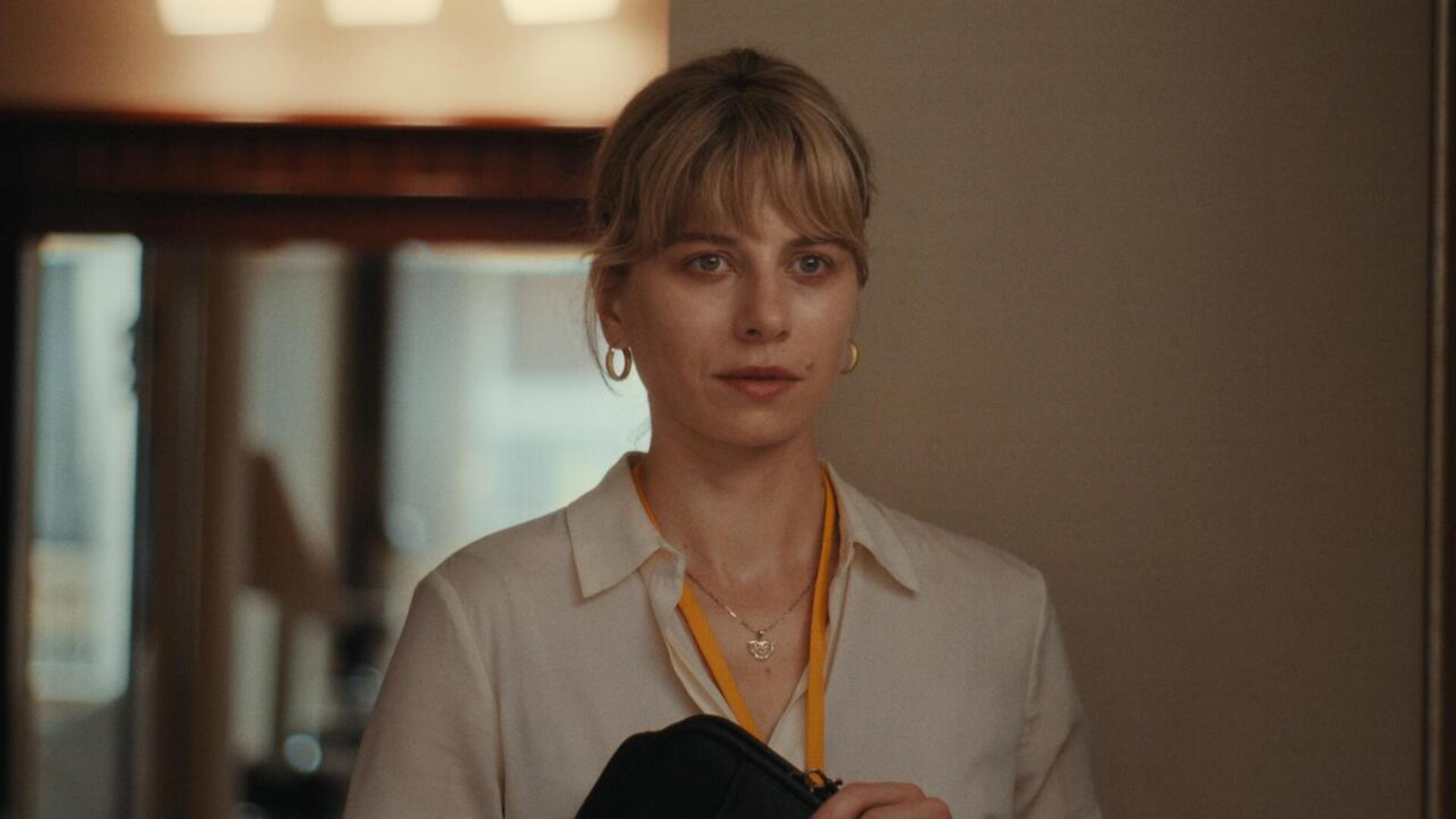
Credits: Obscured Pictures
Credits: Obscured Pictures
Short films often prove that storytelling does not depend on big budget or duration, but on the way a story is told. In a limited runtime, they challenge ideas, provoke emotions, and leave audiences thinking long after the credits roll. That is exactly what makes DISC one of the most talked-about festival shorts of the season.
Making its rounds at Toronto International Film Festival (TIFF) and Tribeca, the film strips intimacy down to its most uncomfortable and honest form. Sounds unusual, right? But that is precisely why it works. Netflix Junkie sat with director and co-writer Blake Rice and lead actress and co-writer Victoria Ratermanis to discuss the film's unsettling opening, the bathroom scene that stopped audiences cold, and the quiet argument the film makes about what it truly means to let someone in.
Ajay Sain: Toronto, Tribeca, IndieWire — DISC has had quite a run. How are you both feeling about where it’s landed?
Blake Rice: It’s like a dream scenario. It’s like a miracle to get anything made these days — and then for a short to actually be seen. We’ve had an unbelievable run. Like a gift of a run.
And Tribeca especially, for almost all of our core team — the producer, director, writer — it’s like a homecoming. So it’s deeply exciting.
Ajay Sain: When the film opens — the tense music, the colors, the motel, the morning after — it genuinely felt like a Black Mirror episode meeting folk horror. Was that intentional? Were you priming the audience for dread?
Blake Rice: In a short format, you want to start with a bunch of questions and be very specific about when you’re spoon-feeding information. Right off the top with DISC, we wanted to feel like we’re in Victoria’s character’s headspace, she doesn’t really know exactly how the night ended, and there are a lot of questions that come with a morning after.
Trickling out that information was totally by design. Our goal was also to create tension and leave the audience wondering: what the hell is happening? What’s behind this door? And to get to a topic that some people feel really uncomfortable addressing — getting you anxious in your seat beforehand is a fun way to set that up.
Ajay Sain: The DISC drew a parallel to Cupid’s arrow for me. Alex wanted out from the moment she woke up, but the DISC designed an awkward situation that brought two strangers together. Was that what you intended?
Victoria Ratermanis: I love hearing how everyone walks away from these two people’s experience. There are so many different cuts of a film — what you write, what you film, what you edit, and then how the audience interprets it.
When Blake and I were working on the script, the core exploration was: what is intimacy between two people? Most people of our generation assume that sleeping with someone is deeply intimate — but these two don’t know anything about each other after a whole night together.
I think it’s a great interpretation — that it’s not whatever weird connection they had at the bar the night before, but the experience of problem-solving together that brings some kind of unity. We don’t give you much of an ending, so it’s up to you to decide how you feel about the relationship between these absolute strangers.
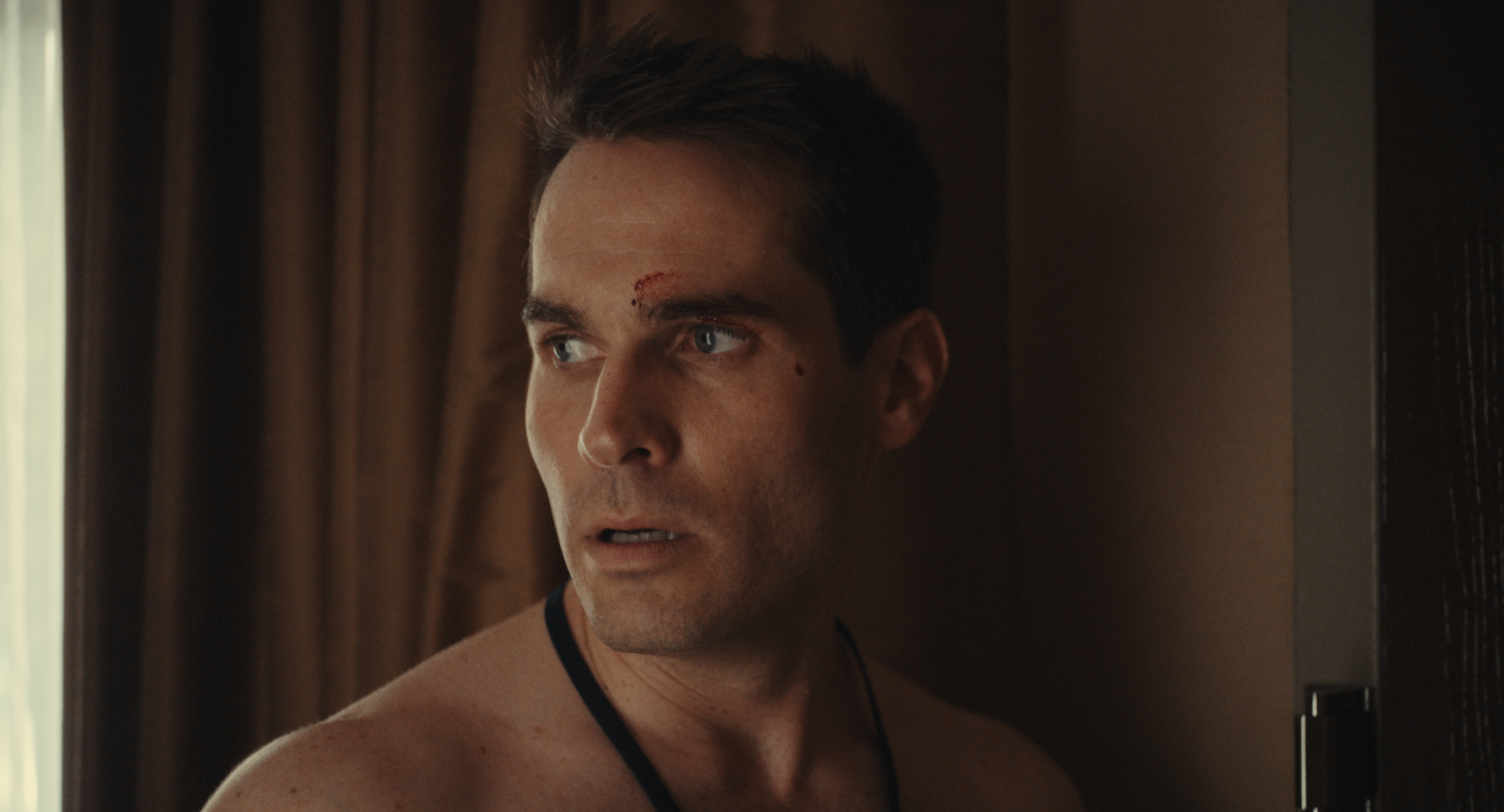
Credit: Obscured Pictures
Credit: Obscured Pictures
Ajay Sain: Alex and Carey spent the night together but were still awkward strangers the next morning. And then the bathroom scene happens, almost choreographed like an intimacy scene. The eye contact, the breathing together. Was that parallel intentional?
Blake Rice: 100%. That’s kind of what Victoria was talking about, you’ve got to earn that intimacy. It’s not in the hook-up the night before. It’s not when they’re not on the same page in the bathroom earlier on. It’s when they actually go through something together and drop their guard.
Shooting that, getting more romantic in the physical coverage, how we’re showing these moments between the two of them — it’s probably the first time we see them together in the same frame right at the end. That’s intentional. They’ve come together, literally.
We also had such a great DP on this project. I felt so safe and free in that environment. I felt like someone who was just getting to play a role — which is a really big gift. When you wear multiple hats it’s easy to be thinking about so much, but I really didn’t have to think too much in those moments. I got to just play. I cried that day. It was the best day of my life.
Victoria Ratermanis: And Blake had such a specific, great idea for the score, it really plays into that combining of two lonely islands coming together. There’s that accumulation of sound, bodies, action, breath work, intimacy, all in that landing moment. I think it pays off really well.
Ajay Sain: Victoria, you wrote Alex and you performed her. When you’re writing a character, you’re in control. When you’re performing her, you’re surrendering that control. How different did those two feel, specifically in that bathroom scene?
Victoria Ratermanis: Absolutely, and I think my entire goal, beyond being friends with Blake and wanting to work with him, was bringing on a director I trust. So on the day, I could just be an actor. I got to forget about the relationship I’d had to the story and the script, and just let Blake work.
Ajay Sain: Carey was so considerate and gentle with the whole situation — even though he didn’t understand what was going on. He offered to run a hot shower, washed his hands first. How did you and Jim build that character?
Blake Rice: It comes down to prep. Jim and Victoria were both very trusting from the start, and they’re both such great storytellers that they’re aware of where things can feel tropey and how to evolve beyond that.
Jim’s character doesn’t really understand the female anatomy that well, but there’s more there. There’s something cool about the character being this golden retriever who authentically wants to help — even if he’s scared to dip his toe in right away. Jim understood very well that figuring out that journey was part of it. What does this Carey character do when he’s uncomfortable? He starts blabbering. He tries to say the right thing, which comes out as the wrong thing. He offers bad solutions, any escape to get out of it.
All of that had to happen before he could really put his walls down and provide real value. That character’s arc is him finding his own value as a person. We really dug into what’s beneath it all.
Victoria Ratermanis: Jim does these things so genuinely. There was no judgment of the character at all, only joy and love for this person who is so willing to participate even though he’s absolutely terrified. He’s genuinely hearing information for the first time, like his character is. It’s such a gift as a scene partner. And I think both Jim and I were very aware of each other’s roles — we both knew when to support and when to step up to the plate. It was a great, fast learn.
Ajay Sain: How did you come up with this concept — using a disc, a tampon alternative, as a way for two people to connect?
Victoria Ratermanis: It came from a few places. Being a New Yorker living in LA, I felt a culture shock — it’s a no-new-friends kind of city. It also came from vulnerability: I’m five years sober now. Trying to date or find intimacy as a sober person in a new city was just so vulnerable. I felt like I wasn’t actually ever meeting people.
It came from thinking about what real intimacy between people actually is, and what would be the hardest thing to ask for help with — and the greatest sign that someone is willing to be present. My weird mind just went there. This was the first thing I thought of.
It also came out of the writer’s strike, there wasn’t a lot going on. I sat down and wrote maybe six different mini shorts, pitched them to Blake, and he said, I like this one. We built from there. For me, the core of it is that two-second moment of being like, I think I need your help. I feel it in my teeth a little — how painful and nerve-wracking that kind of vulnerability is. I need your help to be a person here.
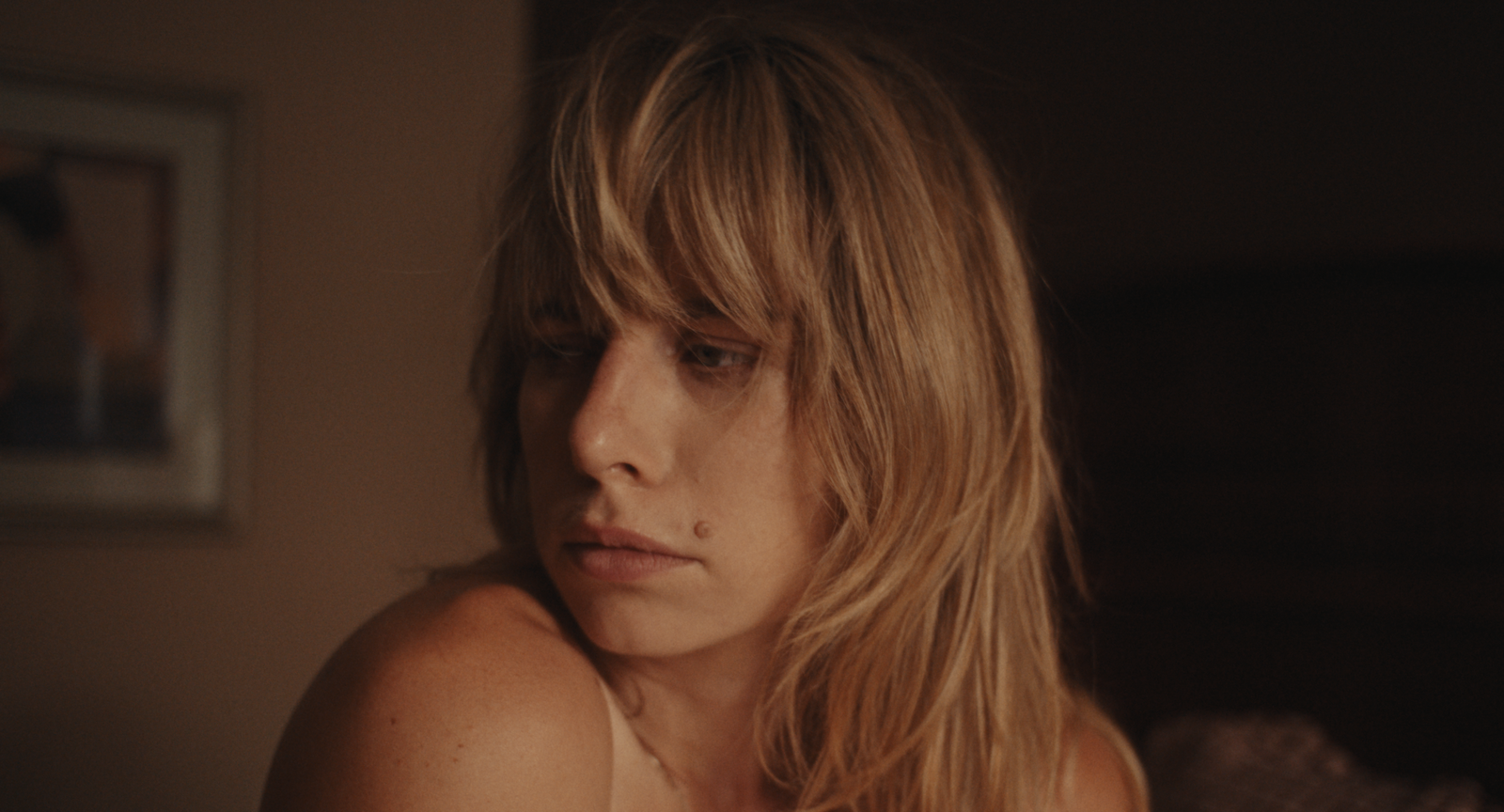
Credit: Obscured Pictures
Credit: Obscured Pictures
Ajay Sain: The film argues that the most vulnerable, intimate moment two people can share has nothing to do with physical intimacy. Do you believe that?
Blake Rice: I definitely believe it. There are more intimate moments than just a one-night stand. You could do that and not really have much of a relationship at all. But when you go through something stressful or uncomfortable together — you probably learn more about a person through a breakup than you do when you first meet them. When there’s that kind of shared difficulty, and two people start at different ends and end the journey together, you’re able to process a lot more and learn from it.
I hope that in a funny way, the film itself — because of how stressful it is to watch — makes people talk about it afterward and have their own little mini experience with it.
What do you think about DISC? Let us know in the comments.

Edited By: Aliza Siddiqui
