
Hugh Laurie vs Janet Murray: The Online Beef Between 'House' Creator and The Journalist Explained
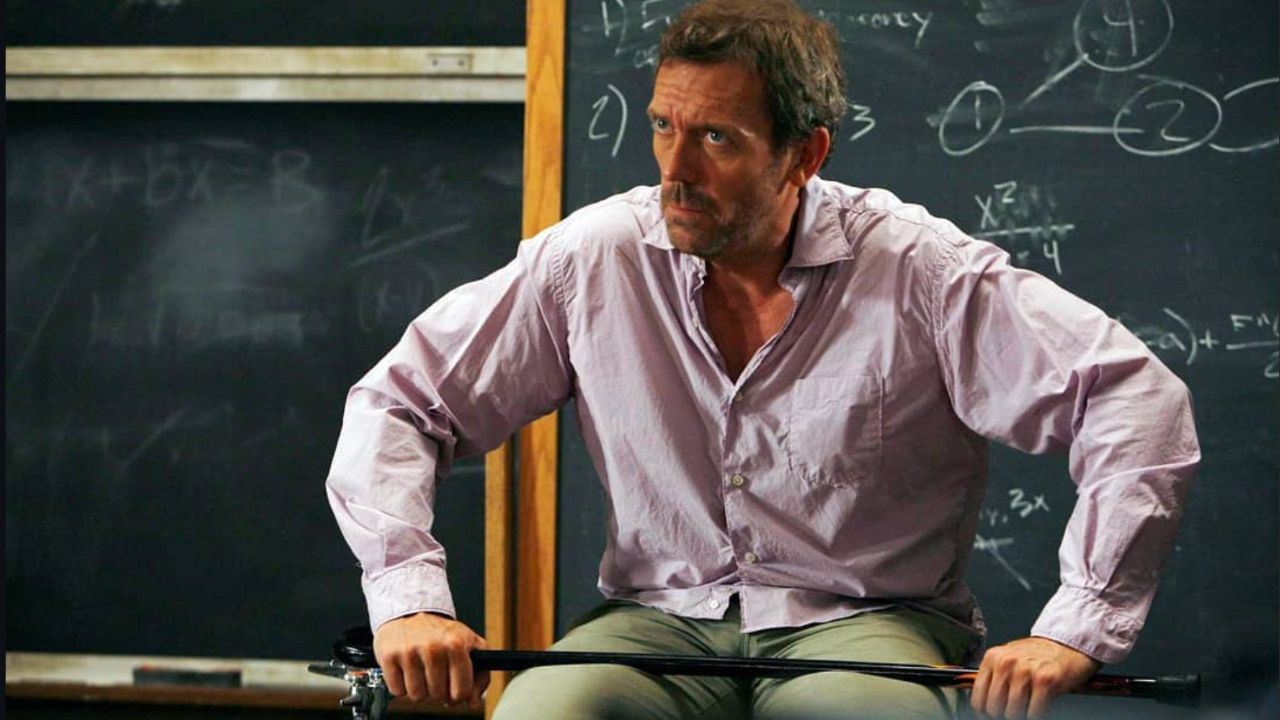
Credits: Hugh Laurie in House/ @hughlaurie12 via Instagram/ Production: Heel and Toe Films, Shore Z Productions, Bad Hat Harry Productions and Universal Television/ Network: Fox
Credits: Hugh Laurie in House/ @hughlaurie12 via Instagram/ Production: Heel and Toe Films, Shore Z Productions, Bad Hat Harry Productions and Universal Television/ Network: Fox
More than a decade after its finale, House remains one of television's most beloved medical dramas, with Hugh Laurie's sharp, sarcastic portrayal of Dr. Gregory House continuing to attract new audiences through streaming. The series has enjoyed a remarkable resurgence online, where fans regularly revisit its iconic episodes, memorable diagnoses, and unconventional storytelling style. That enduring popularity is precisely why a recent conversation on X captured so much attention.
What began as a journalist's observation about the show's formula soon evolved into a viral exchange involving Laurie himself, sparking debate among longtime fans and casual viewers alike. Here is everything you need to know about the online back-and-forth between Janet Murray and Hugh Laurie.
The tweet that brought Hugh Laurie into the discussion
On June 6, journalist Janet Murray shared her thoughts on House after recently starting the show's first season. Posting on X, she joked that she had already figured out the series' formula and questioned how the medical drama managed to sustain it for eight seasons.
"Late to the party, but I've started watching Season 1 of House. Same narrative every episode: Patient has mysterious illness. Hugh Laurie (House) gets diagnosis wrong. Patient nearly dies. Hugh Laurie gets diagnosis wrong again. Gets threatened with being fired. Patient nearly dies again. Hugh Laurie has last minute leftfield idea. Gets diagnosis right. Doesn't get fired. Eight seasons of this?" she wrote.
Murray's joke is not entirely wrong. On the surface, House does follow a familiar structure: a patient arrives with a baffling illness, several theories fail, tensions rise, and Dr. House eventually uncovers the answer. But longtime fans would argue that the medical mystery is only the vehicle, not the destination. The show's real appeal lies in its characters and relationships. Created by David Shore as a modern-day take on Sherlock Holmes, Gregory House is less a conventional doctor than a detective solving medical crimes, with Dr. James Wilson, played by Robert Sean Leonard, known for his role of Neil Perry in Dead Poets Society, serving as his Watson.
House's brilliance, cynicism, chronic pain, and Vicodin addiction create a deeply flawed protagonist whose greatest battles are often internal rather than medical. Over eight seasons, viewers become invested in his complicated bonds with Wilson, Lisa Cuddy, Allison Cameron, Eric Foreman, Robert Chase, and countless others, watching how his relentless pursuit of truth pushes them to grow while often forcing them to confront uncomfortable truths about themselves. Beneath the diagnoses are stories about friendship, loyalty, love, grief, morality, and self-destruction.
The series also evolves far beyond its case-of-the-week format, exploring addiction, mental health, career ambitions, ethical dilemmas, and personal redemption. That is why House remains beloved years later. Fans did not tune in simply to find out what disease a patient had. They came back to watch a brilliant but deeply damaged man struggle to understand humanity while slowly revealing his own.
So, naturally, many fans pushed back against Murray's assessment, arguing that she was judging the series too early. Several pointed out that while the medical cases follow a familiar mystery structure, the heart of House lies in its character development, team dynamics, and long-running relationships rather than the patients themselves. Others noted that the show's formula is intentionally modeled after classic detective stories, particularly Sherlock Holmes, where the appeal comes from watching a brilliant but unconventional investigator unravel seemingly impossible puzzles.
Some fans also defended Hugh Laurie's performance, emphasizing that he simply brought the character to life while the show's structure was ultimately the writers' and network's decision. Overall, the response from fans was that House is far deeper than its episode-to-episode formula might initially suggest, and rightfully so, because nearly fifteen years after it ended, the series still holds an impressive 8.7/10 rating on IMDb from more than half a million users, while its audience score on Rotten Tomatoes sits at 95%.
Fans argue that if the show were truly nothing more than "patient gets sick, House solves it," it would not have maintained that level of popularity for eight seasons and 177 episodes. The medical cases provide the structure, but the character arcs provide the payoff. Much like Sherlock Holmes stories, the audience already expects the genius detective to solve the mystery. The entertainment comes from watching how he gets there, how his flaws complicate the journey, and how the people around him react. That is why many viewers consider House one of television's most successful modern mystery dramas rather than simply a medical procedural. However, the conversation took an unexpected turn when Hugh Laurie himself weighed in. His response to Murray's post transformed an ordinary television debate into a headline-making exchange.
Hugh Laurie's witty defense of House
Few actors have ever seemed as naturally suited to playing a genius as Hugh Laurie. Long before House turned him into a television icon, Laurie had built a reputation as one of Britain's sharpest comedic minds through Blackadder, A Bit of Fry & Laurie, and Jeeves and Wooster. Many viewers know him as the lovable and slightly bewildered Frederick Little from the Stuart Little films, where he brought warmth and charm to a family-friendly role that could not be more different from Gregory House. Others point to his acclaimed performance as Richard Roper in The Night Manager, where he transformed into a charismatic yet terrifying arms dealer, earning a Golden Globe for the role. Critics praised Roper as one of television's most compelling villains, a character whose intelligence and menace were hidden beneath an effortless charm.
Educated at Eton and later at Cambridge University, he is also an accomplished novelist, musician, and writer whose debut spy thriller, The Gun Seller, was praised for its intelligence, wit, and razor-sharp humor. Critics and readers alike have often noted that the book's cynical observations and clever dialogue feel remarkably similar to the qualities that made Dr. Gregory House so memorable.
That same quick wit was on full display when journalist Janet Murray's criticism of House began gaining traction online. While thousands of fans rushed to defend the medical drama, Laurie himself eventually entered the conversation. Rather than responding with outrage, he approached the debate with the same dry humor, intelligence, and playful sarcasm that made audiences fall in love with Dr. House in the first place, turning what could have been a routine social media disagreement into one of the internet's most entertaining television debates.
“Thanks for your critique, Janet. We actually tried a couple of episodes where House (Hugh Laurie) (please put the brackets in the right place) gets it right first time, but they were only 6 minutes long. NBC weren’t happy. Then we tried some where House never gets it right and the patient dies. The audience wasn’t happy.” He wrote.
Rather than directly arguing about the structure of House, Laurie responded by making a broader point about art itself. He argued that many celebrated works follow recurring themes, patterns, or frameworks, yet remain compelling because of the creativity, emotion, and variation they contain.
“One could apply your trenchant analysis to other art forms: JS Bach wrote 30 Goldberg variations on the same chord structure; Frida Kahlo painted 50 portraits of herself; Henry Moore, what??” He continued. “The point is, or was, variations on a theme; if all you see is hospital, medical blah blah, then it wasn’t meant for you.”
In other words, he suggested that focusing solely on the show's recurring medical-mystery format overlooks what fans believe is the real appeal of House. Laurie then illustrated his point with a series of comparisons to renowned artists and creators, before ending his response with a characteristically witty remark, “Nonetheless, I look forward to your first novel! ”
Not everyone was convinced Laurie needed to get involved. Some users questioned why the actor would respond so passionately to criticism of a series that ended more than a decade ago, arguing that House was already a hugely successful show and that his acclaimed performance as Dr. Gregory House speaks for itself. But Laurie's reply revealed something deeper.
“I put no more effort into my message than you have into yours. It just happens to be closer to my heart,” he stated, and for many fans, that brief remark was telling. It suggested that even fourteen years after the finale, Laurie still feels a personal connection to the series, its characters, and the creative work that helped define a significant chapter of his career.
To her credit, Murray appeared to take the unexpected attention in good spirits. After Laurie replied, she reposted his response and joked.
"Well, this was unexpected. And not the slightest bit patronising," she wrote.
The comment helped keep the exchange lighthearted rather than adversarial. Despite the disagreement over House, there was little sign of genuine hostility between the two. Instead, what could have become a typical social media argument evolved into a playful back-and-forth, with Murray acknowledging the surprise of receiving a response from the show's star while Laurie defended the series with the same wit and intelligence that made him famous. In the end, the exchange felt less like a feud and more like a spirited debate between someone discovering the show for the first time and one of the people who helped make it a television phenomenon.
The awards and acclaim behind Hugh Laurie's Dr. House
Today, his performance as Dr. Gregory House transformed him from a beloved British comedian into an international television star and earned him two Golden Globe Awards for Best Actor in a Drama Series. Over the course of the show's run, he also received six consecutive Emmy nominations, won multiple Screen Actors Guild Awards, and helped turn House into one of the most successful television dramas of the 2000s.
The impact of the role extended far beyond awards. At the height of the show's popularity, Laurie became one of the highest-paid actors on American television, reportedly earning around $700,000 per episode. He was also recognized by Guinness World Records as the most-watched leading man on television, a testament to the global reach of House and the character he helped create.
Perhaps most impressive is that the series continues to attract new audiences long after its finale. Clips from House regularly circulate online, introducing a new generation of viewers to the acerbic diagnostician and keeping the show's legacy alive. Whether measured through awards, ratings, cultural impact, or longevity, Laurie's portrayal of Gregory House remains one of the defining television performances of the 21st century.
That enduring relevance is precisely why this debate resonated so strongly with both fans and Laurie himself. Fourteen years after the series ended, people are still discovering House, debating its storytelling, and passionately defending or criticizing its approach. In many ways, the fact that a casual observation about the show's formula could spark a viral discussion involving fans, journalists, and the show's star is a testament to its lasting impact. Most television series fade from public conversation after their finale. House is still generating discourse, attracting new viewers, and inspiring passionate reactions, which may be one of the clearest signs of its success.

What do you think of the debate? Let us know in the comments.

Edited By: Hriddhi Maitra
