
How a 1980s Novel and a Classic Rock Movie Sparked Christopher Nolan’s Obsession With Time
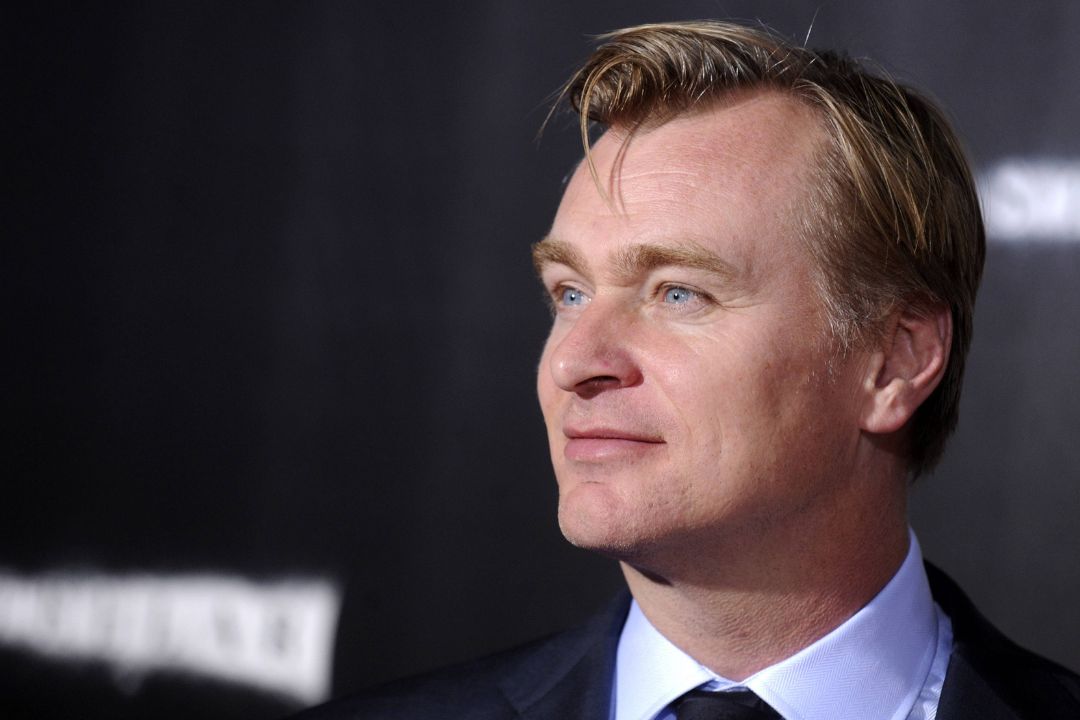
via Imago
Credits: IMAGO / Future Image
Coming in contact with Graham Swift's 1983 novel Waterland, and the cinematic rendition of a Pink Floyd album, The Wall, in his younger years, Christopher Nolan unlocked the secrets of fragmented narratives. Nolan recently reflected on the foundational touchstones that first sparked his lifelong fascination with non-linear storytelling, memory, and the intricate manipulation of time. Long before he became a Hollywood master of temporal puzzles, his mind was completely rewired by two specific artistic masterpieces.
These foundational childhood inspirations directly shaped the unique narrative techniques that defined his early creative development.
The early artistic catalysts of Christopher Nolan's fragmented time plots
ADVERTISEMENT
Article continues below this ad
Christopher Nolan recalled on the Fred Asquith podcast that he read the 1983 novel Waterland as a child, around the same time he watched the musical drama Pink Floyd: The Wall (1982). Nolan highlighted reading the novel as a child, noting that it fragmented time in deeply interesting ways by weaving parallel narrative strands together.
"I think for me reading as a kid Graham Swift's Waterland, which fragments time in a really interesting sort of parallel narrative strands,” Nolan stated, listing the two media. "I read that right about the same time I watched Alan Parker's film of Pink Floyd: The Wall, which takes the album and makes a narrative," Nolan added.
These works introduced him to the extraordinary possibilities of visual storytelling. Published in 1983, Waterland is set in the misty Fens of eastern England. It follows a history teacher who begins telling his students wild, generational family stories and local history instead of his syllabus.
The book famously rejects a linear timeline, a concept that clearly left a massive imprint on Nolan's own structural style. Nolan points out that Pink Floyd: The Wall takes Pink Floyd's iconic concept album and translates it into an extraordinary visual narrative.
“It's a film without dialogue. It's just songs, but it's very evocative, and I think that very much started me thinking about how you can use time in narrative to really create interesting effects,” Nolan said during the Fred Asquith podcast. Seeing time mixed so extraordinarily proved to Nolan how editing could alter human perception.
This early fascination with non-linear storytelling eventually bloomed into a spectacular career filled with temporal cinematic masterpieces.
The evolution of Christopher Nolan's temporal masterpieces
Christopher Nolan initially utilized reverse chronology in Memento to masterfully mirror the disorienting experience of short-term memory loss. He later expanded this concept in Inception, which features nested layers of dreams. In that film, the human mind alters its perception of reality as time stretches exponentially deeper into the subconscious.
Nolan later explored cosmic time dilation in Interstellar, where gravity transforms time into the ultimate galactic antagonist. He pushed these boundaries even further in Tenet by introducing the concept of time inversion, which left Robert Pattinson confused. In this narrative, characters physically move backward while the rest of the world progresses normally.
ADVERTISEMENT
Article continues below this ad
By moving beyond conventional storytelling structures, the director constantly challenges how audiences view reality. Ultimately, the cinematic brilliance of Christopher Nolan remains forever anchored in the fragmented pages and evocative musical timelines that captured his imagination as a child.
ADVERTISEMENT
Article continues below this ad
What do you think about Christopher Nolan's inspirations? Let us know in the comments.
ADVERTISEMENT

Edited By: Adiba Nizami
ADVERTISEMENT
ADVERTISEMENT
