
[INTERVIEW] HollyShorts: 'Still Life' Makers Kate Radcliffe and Sarah Roy on Stillbirth, Grief and the Pain That Comes After Loss
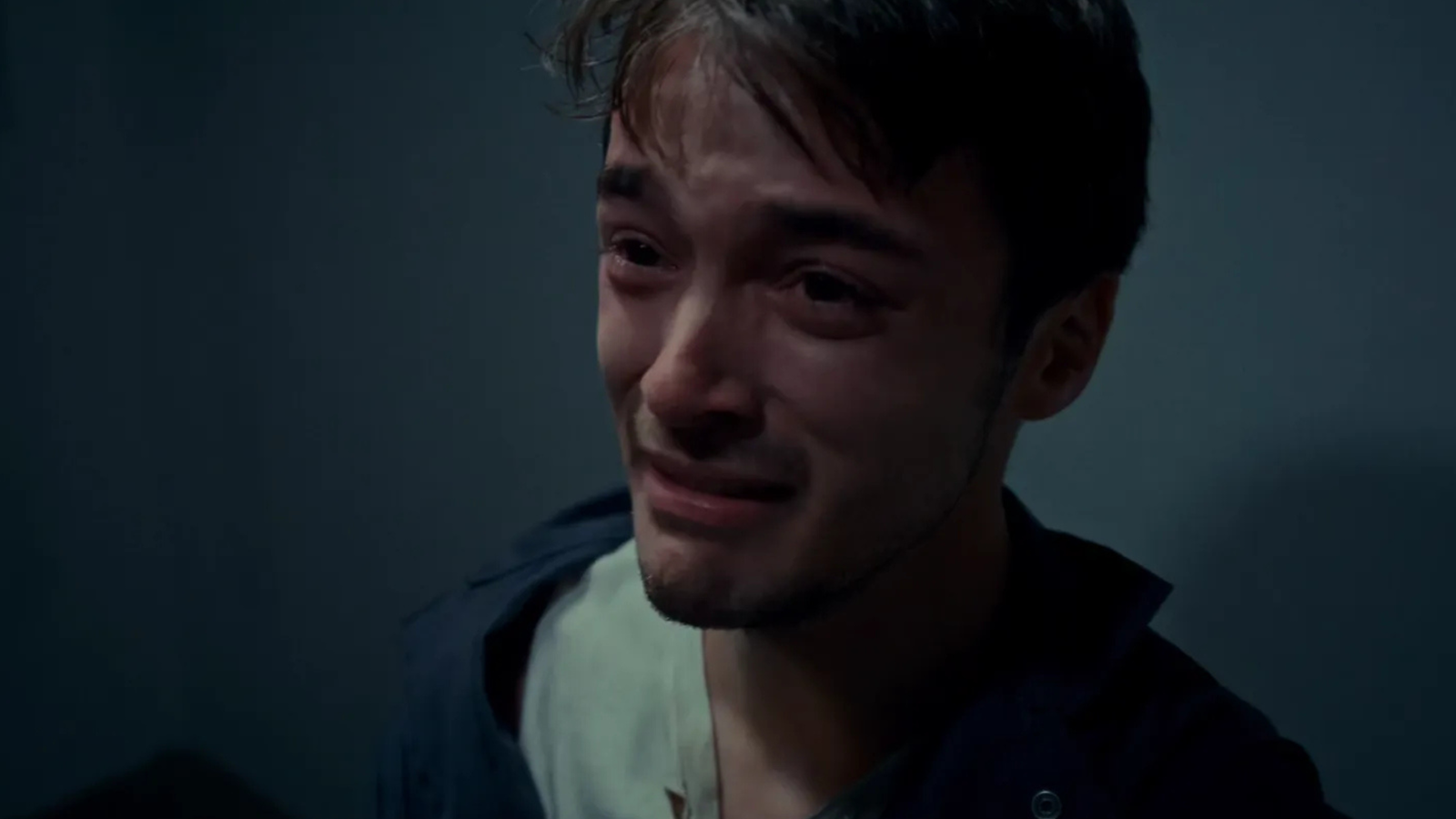
Ophelia Lovibond and Jacob Anderson in 'Still Life' by Kate Radcliffe (Writer/Producer) and Sophie King (Director). (Photo Credit: 19th Street Productions)
Ophelia Lovibond and Jacob Anderson in 'Still Life' by Kate Radcliffe (Writer/Producer) and Sophie King (Director). (Photo Credit: 19th Street Productions)
There is a lot that people do not know about pregnancy and how it feels when everything goes wrong. Every year, 21,000 babies are stillborn in the USA, leaving behind families carrying a grief that is often invisible but never truly gone. Sophie King's Still Life takes an intimate look at that invisible pain and takes viewers on a journey that never gets a chance to unfold.
Inspired by writer Kate Radcliffe's own experience of child loss, the short film, which premiered at this year's HollyShorts Festival, chronicles the journey of a couple dealing with grief, trauma, and the complicated realities of moving forward after stillbirth. But what this film does phenomenally well is that it does not solely focus on the loss itself. Instead, it explores the quieter aftermath and the way grief can reshape relationships and the idea of parenthood.
NetflixJunkie caught up with Radcliffe and producer Sarah Roy during the festival and discussed how they thought of bringing such a deeply personal story to the screen. Moreover, the duo opened up about balancing humor with heartbreak, and why conversations around stillbirth need to happen in the open.
ADVERTISEMENT
Article continues below this ad
Aayush Sharma: One thing that struck me is that Still Life isn't really about the stillbirth itself—it's about everything that comes after. The film spends more time observing the invisible, everyday weight of grief than the tragedy itself. Was that a conscious decision to shift the audience's focus from the event to the lifelong aftermath, and why did that perspective feel more truthful to you?
Kate Radcliffe: I think it was important for me to write the short film more about the aftermath of stillbirth because I think that is probably less talked about. I mean, we all know that having a stillbirth or experiencing baby loss at any gestation, even, actually, an IVF pregnancy, is all pretty harrowing at points and heartbreaking. But I think what some people don't realise is that, after these tragic events, you actually have to go and carry on with your life. Even with any sort of big tragedy, it's sort of: how do you continue when your life has changed tremendously, and everyone else is going about their business, but you're still very much in this bubble as a couple?
I definitely felt that when I lost Dexter. When I left the house, everything was a trigger. Suddenly, there were thousands of pregnant people. I was like, I hadn't noticed them before. Or everyone was talking about babies, or even just minute little things like yoga, for example.
I realised that loads of poses are to do with children or babies. So I think it was very important for me to capture that moment. I also feel it made it more watchable for the audience because I think if you're just thrown straight into the midst of someone having a stillbirth and watching that, and the sort of direct aftermath, it is quite a harrowing watch. So I think the way we've done it makes it a bit more relatable to people, especially people who haven't experienced baby loss and are wanting to start their own family.
You've watched it again, which is great, because you realise there are many more layers to it, which is lovely.
Ophelia Lovibond and Jacob Anderson in 'Still Life' (Photo Credit: 19th Street Productions)
Ophelia Lovibond and Jacob Anderson in 'Still Life' (Photo Credit: 19th Street Productions)
Aayush: Jess's emotional arc is fascinating because she rarely verbalizes what she's feeling. Instead, her grief is communicated through silence, hesitation, and body language. As the writer, how did you decide what should remain unspoken, trusting the audience to read between the lines rather than explaining her emotions through dialogue?
Kate: We were so lucky to have Ophelia as Jess, and she is just a phenomenal actress. As you said, there is a lot said that is just on her face, and I think that's something the director, Sophie King, captured amazingly as well: the kind of silences and the facial expressions, where you didn't need all this dialogue. As the audience, you are actually in it with her, sort of on that journey, and it is a sort of slow burn that then obviously hits a breaking point. But the way I write is quite; I try to stay very true to the dialogue and keep it naturalistic.
I mean, I watch a lot of great shows, and they are great for a reason, but the dialogue is like, people don't talk like that. Whereas I really try to write the way people speak. Like the hospital scene, for example, that did all happen, and it was pretty much, you know, verbatim the words that were said because I wrote that scene quite soon afterwards, and I remember it was sort of imprinted in my mind. I mean, probably a few people would say you shouldn't write like that, but I did, and I think it works because you don't have to say it all the time, do you?
You can just feel it or see it.
Aayush: As the producer, Sarah, you were overseeing a film built around an incredibly sensitive and deeply personal subject. How did you strike a balance between the practical realities of production—budgets, schedules, and time constraints—while ensuring that none of those pressures compromised the emotional honesty the story demanded?
Sarah Roy: I think an important part of the filmmaking process, certainly during shooting, was to have that support on set because, you know, it's obviously very difficult to watch. So, having that support available for anyone who felt very emotional or upset- to have someone to go to, talk to, and receive that support from- was really important for us. And I would say that Kate was absolutely amazing during the production process.
I actually think I was more of an emotional mess, so Kate was doing a lot of comforting for me. But yeah, it was just really beautiful to watch, and actually a privilege to watch Ophelia work in the way that she did. I think there were a lot of times that people got quite teary watching her. But yeah, it was just a very supportive crew of wonderful people.

Aayush: Throughout the film, it feels like Jess isn't only grieving her baby—she's grieving the version of motherhood she had already imagined. Were you intentionally exploring the idea that people often mourn futures and identities just as deeply as they mourn people?
Kate: It's a great question because that is exactly what we're trying to say in the film, and it was exactly how I felt after losing Dexter. You are still a mother, but you're a different kind of mother, and in the baby loss community, we talk about that a lot. Actually, it was Mother's Day about 10 days after we lost Dexter, and I didn't think much of it at the time. Then the day happened, and I was like, God, this is incredibly difficult.
I am trying to find my way in the world as a different kind of mum, and I'm not really sure what comes with that.
Sarah: I think you're right about the way in which we sort of mourn our previous selves. Kate and I, while we were developing this, both became mothers. You know, you've had your two boys after Dexter, and I had a little boy as well, so there was a lot of change for both of us. I think, yes, becoming new mothers and having your lives change is also about, I guess, mourning your old self in a way.
Kate: There is that as well. You do lose yourself, in a good and bad way, when you become a mum of a living baby, or one that's sadly not with us. But a big thing as well when you lose a baby is, you know, you've planned, you've spent all this time planning for this new arrival, and it's ripped away from you. And you are mourning all those dreams and thoughts you had for that baby. You know, where are they going to go to school? What's their name going to be? When might they walk?
And that's kind of represented in the supermarket scene where they bump into Tessa and Hugo, and Tessa is just wanging on about, "Are you going to do this? Are you going to do that? Breastfeeding?" And she's like, "God, well, I hadn't even thought about that because I didn't even get that far." Yeah, so it's a very good question, but it is about mourning your kind of, yeah, like, potential of being a mum and your previous life.
Aayush: One of my favorite choices was the brief comedic exchange between the doctor and the nurse. It almost catches you off guard before reminding you that life—and even humor—continues around unimaginable loss. How did you find that delicate balance between moments of levity and emotional authenticity without letting either undermine the other?
Kate: I mean, everyone is brilliant. Felicity is, you know, a comedy icon, and I loved how she played that part because she played it just perfectly, as the kind of consultant who's rushed off their feet, trying to think on their toes. Like, "We haven't got the light, let's get the iPhone torch up." And that did happen, and it was such a bizarre thing to happen. That's where the comedy comes from.
It's not about anyone playing to the comedy or being comedy characters. I mean, Tessa and Hugo are slight comedy characters, but those conversations I definitely had with people. They all came from a real place, and I think that's also a testament to Sophie King, that she finds that beautiful nuance between the, you know, heartbreaking emotion and the comedy so seamlessly that you're not pulled out of one or the other, I think.
Sarah: No, I think the way that Kate- you write it- I think it's a very difficult thing to do, to strike that balance between the comedy and the grief and emotion. I think both Kate and Sophie just did it so beautifully. I think it's a very tricky thing to do, actually, and I think they nailed it.
Aayush: Many of the film's most powerful scenes ask the cast to go to emotionally vulnerable places. From a producer's perspective, what measures did you put in place to create an environment where the actors and crew felt psychologically safe while filming such emotionally demanding material? Was that something you planned for from the outset?
Sarah: We did talk about having that support, I mean, not just for the actors, but for everyone. But I think also, having been an actor before, I appreciate on a different level what it means to have to go to those places. But I think also, Kate, you really worked with Ophelia and talked to her a lot about your experience. And yeah, so I think Sophie was absolutely brilliant, and I think it's just about creating a very warm, supportive atmosphere where actually everyone feels like they can just talk about these things and talk to any of us at any point.
Yeah, just making everyone feel very, very secure from the word go, really.
Kate: I mean, Sophie has had a baby loss as well. The director, and her brother was stillborn, which we didn't actually know before we met her and asked her to join. And so it was amazing because she has that real connection, so she really understands how sensitive you have to be with this subject matter. We also had a few people on the cast and crew who had also experienced either first-hand or second-hand baby loss.
So yeah, we just had to be mindful. There was a protocol in place if someone felt they needed a moment. But as Sarah said, we worked very closely with the actors, Ophelia and Jacob, and I think it helped that I was able to give them my backstory and context and kind of make them really feel comfortable as well.
Aayush: Because the story is inspired by your own experience, Kate, was there ever a point during writing when you realized the script needed less dramatic invention and more emotional restraint? Were there scenes you simplified because the truth itself was already powerful enough?
Kate: Oh, that's a good question. It's a tough question as well. I don't think I did toy with it; I mean, there was quite a while that I toyed with what that flashback at the beginning was going to be, and there was more of an intense flashback. So now it's that hospital scene, which works beautifully because you think she's lost the baby and we're watching it happen in real time, and then she doesn't, and you're like, "Oh." And you're, as the audience, pulled in between.
But there, it was going to be visiting the baby in the—God, it sounds really dark—in the morgue, which my husband and I did do because I wanted to say one final goodbye. But I'm glad we didn't do that because that would have been really heavy. It would have told the audience too much, and I think that was a lot of the thought process between me and Sophie.
And Sarah was like, "We don't need to tell the audience everything all the time. You can let them figure it out." By saying, as I said, not that much. So it was a decision to kind of let it build very beautifully until, at the very end, you do tell the audience what's happened, and it's quite a kind of moment. And then I think, we played with the ending a lot.
Well, we didn't play with it; she was always smashing stuff. But before, she was going to tear the whole place up and rip things off the shelves. I just actually, after a while, I was like, "I mean, that didn't actually happen." I did have a big guttural scream at one point after Dexter died, but not—not in a supermarket aisle.
But I just didn't think that was true to the character, that she's going to start tearing the place up. So instead, it's that beautiful drop of the jar of sauce, which is very sort of symbolic. It's sort of symbolic of the bleeds she's had, this bright red, you know, of periods that women have, sort of, that signify you're not pregnant. Or, you know, there are so many meanings to it. Sort of, blood is a thing that, for women, is very important in our sort of cycles in life.
And then you obviously also had that beautiful Steadicam shot at the end, which is our sort of beautiful message of hope, because we didn't want to leave it on this very heartbreaking image of the couple. We wanted people to realise life does go on, and everyone has their trials and tribulations. And that day, it's a man who's forgotten to buy a Mother's Day card, or it's the father being roped into buying a sweet for his son, and it sort of all ties into this beautiful message of parenthood. But I think it would have been wrong had we gone down the complete smashing-up-the-supermarket route, so that was something that was changed, yeah, slightly. And logistically challenging.
Aayush: I was intrigued by how the supporting characters constantly try to comfort Jess, yet many of their words unintentionally create more emotional distance. Were you commenting on society's discomfort around grief—that people often rush to 'fix' pain because silence feels unbearable?
Kate: It's that moment of—I always feel bad saying that people sort of say the wrong thing, or they don't mean to, and I prefer it when people say something. There were a lot of silences that were very—they stood out more to me. I think we just wanted, in the end, the friends and family to come to them as a couple, to signify that we don't think that people are just saying and doing the wrong thing and wandering off, that they have realized what has happened and are the first people to come and comfort the couple as well.
So that kind of tender moment where they all kind of come round and huddle around them was really important to us.
Sarah: Definitely. I think that was one of the things that I loved about this script, particularly the longer-form version of it, is the way that it deals with how relatives and friends react to Jess. I just thought it was so very interesting and true to life, really.
Aayush: After watching Still Life, I felt the film wasn't asking audiences to understand stillbirth intellectually—it was asking them to sit with the discomfort of grief without looking away. If one viewer who has never experienced pregnancy loss walks away with a completely different understanding of bereavement, what misconception do you hope the film permanently changes?
Kate: I think for me, I hope that people aren't afraid to have those conversations, to talk about baby loss. With any trauma, I do believe that you should always, if someone has lost someone or is going through a hard time, reach out and text that person. The silence around these things speaks volumes. So someone in the early stages who hadn't experienced baby loss watched the film and actually really loved the end sequence because they thought, even if you haven't experienced baby loss, we all have mums, we all have parents, and we all have journeys and lives.
ADVERTISEMENT
Article continues below this ad
It's just a slight message of the film is also just to be kind to each other, and you never know what someone else is going through. So I'm not saying, watch what you say because you don't know what everyone is going through at all, but it's just about being inquisitive, I think, about what people are going through, to try and understand. No, I actually would love people to say, "I don't understand, can you tell me?"
And I would be like, "Yes, of course." That, to me, is more lovely than you being scared to message me and dropping off the face of the earth. And I think with any tragedy, it's important to just reach out and say, "Are you okay?"
ADVERTISEMENT
Article continues below this ad
Have you seen Still Life? Let us know your thoughts in the comments.
ADVERTISEMENT

Edited By: Adiba Nizami
More from Netflix Junkie on Hollywood News






ADVERTISEMENT