
HollyShorts INTERVIEW: 'Aurora's Angad Aulakh and Guy Kent Talk Inspirations, Spirituality and Why Their Space Film Ends Without A Resolution
Credit: Last Carnival
Credit: Last Carnival
There is truly nothing as haunting as an openness where you know there is no one else but you, but what if that ghost of solitude is the means to enlightenment? What if it is only through this path that you will finally be bare in front of your hesitations, traumas, realities, grief, loss, and mortality itself?
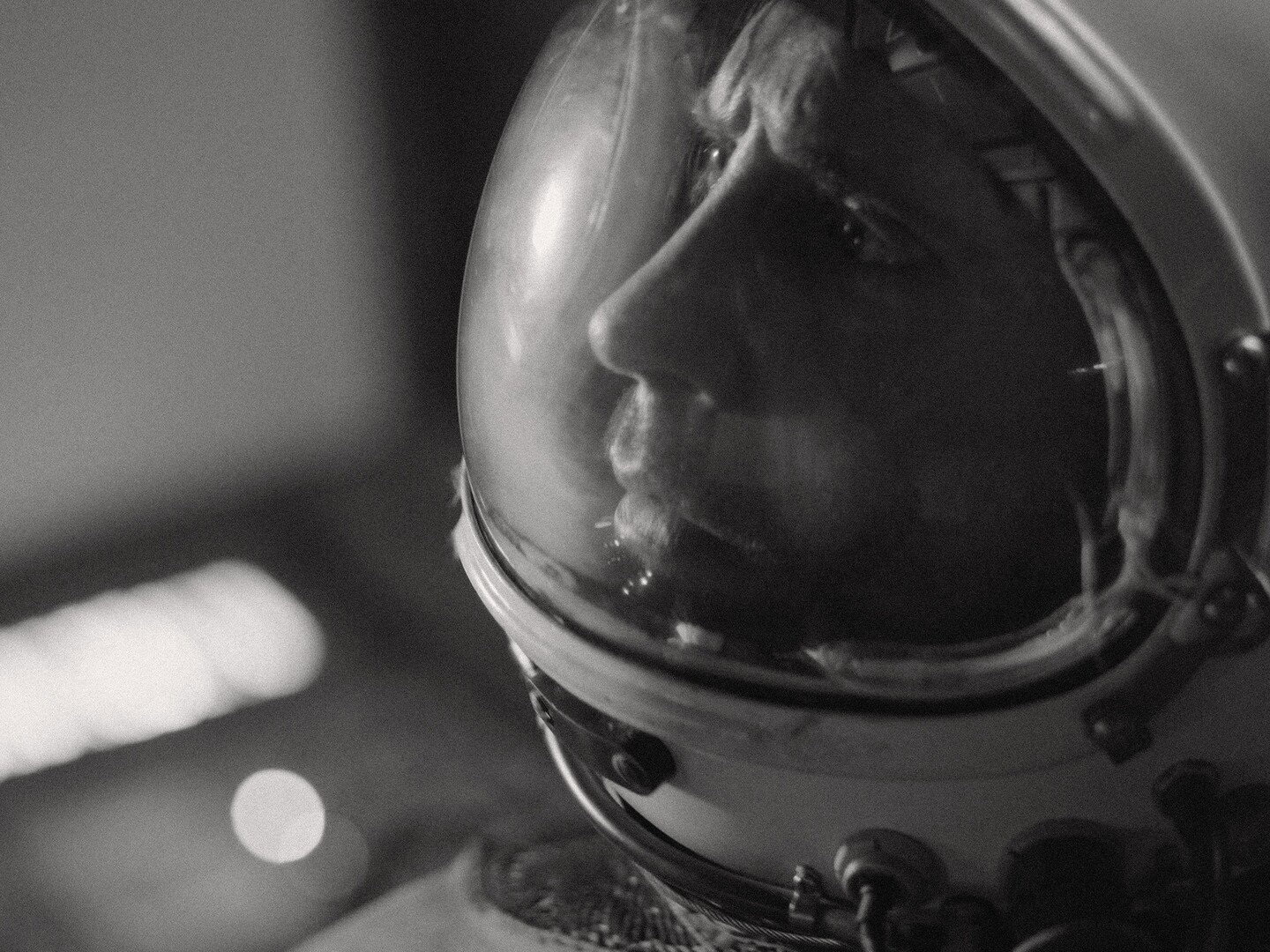
That is exactly what Angad Aulakh and Guy Kent's Aurora serves: a crisp 15-minute sci-fi film set in the darkness of space, where the only character is a survivor of a catastrophic accident in deep space. Guy Kent's Freddie Ballard is filled with an unending amount of survivor's guilt/ What follows is a tale of a human encountering/reaching enlightenment in the most surreal way possible. A true masterpiece of filmmaking and storytelling, Aurora feels like a perfect story to witness following he global phenomenon starring Ryan Gosling and Rocky in Project Hail Mary. In an exclusive conversation with NetflixJunkie, Angad Aulakh and Guy Kent dive deeper into the making, inspirations, and experience of creating this magical short film
Manorath Thacker: Aurora appears to begin as a survival story, but survival almost becomes the least interesting question once Freddie is stranded. At what point in developing the screenplay did you realise that the real story wasn't about whether a man could get back to Earth, but whether he could return to himself? How did that realisation change the architecture of the film?
Angad Aulakh: The survival framework was always useful because it gives the audience something very tangible to hold onto, but the film was never really about whether Freddie could repair something and get back to Earth. What interested me much more was the idea of rebirth and of the forces in the universe that exist completely outside our understanding.
At a certain point, the question became: what if there was something out there that took an altruistic interest in Freddie? Not something he could explain, control, or even necessarily comprehend, but something that saw him in this moment of complete isolation and intervened. That opened the film up for me, because suddenly it was no longer just a survival story. It became a story about the possibility that the universe may contain forms of intelligence, consciousness, or even compassion that are beyond the limits of what we currently understand.
That changed the architecture of the film pretty dramatically. The practical survival elements begin to fall away, and the story starts moving into something more psychological, spiritual, and mythic. Freddie is trying to return to Earth, yes. But he’s also being transformed. In that sense, the return itself becomes a kind of rebirth.
And that mystery was very important to me. I didn’t want to explain the force that reaches him or reduce it to a set of rules. The universe is still full of things we don’t understand, and I wanted the film to preserve that sense of wonder. The idea that there could be something out there, watching, capable of an act of kindness we can’t explain, became much more interesting to me than whether Freddie could simply make it home.
Credit: Last Carnival
Credit: Last Carnival
Manorath Thacker: The film's dreamlike quality and the way images, memories, visions, and reality seem to bleed into one another. How did you technically map those transitions in the script and edit? Were there specific rules about when the audience should feel grounded in Freddie's reality and when you wanted that ground to deliberately disappear beneath them?
Angad Aulakh: A lot of that was built into the script from the beginning, because I wanted the transitions to feel less like conventional flashbacks or dream sequences and more like Freddie’s reality was gradually becoming porous.
The basic rule was that we always needed to begin from something emotionally or physically grounded. A sound, an object, a memory, a piece of music, something tactile inside the station. Then we could let that image pull him somewhere else. The transitions were rarely meant to announce themselves. I didn’t want the audience to feel, “Now we’re entering a memory,” or, “Now this is a vision.” I wanted those boundaries to become increasingly difficult to define.
In the edit, that became a question of rhythm and association more than continuity. Sometimes a cut was motivated by movement, sometimes by sound, sometimes simply by an emotional connection between two images. The further Freddie gets into the experience, the less reliable those transitions become, because his relationship to reality is changing as well.
But I also think it was important not to make the film abstract just for the sake of abstraction. We kept returning to it so the audience always had some kind of anchor. Then, as the film progresses, we deliberately remove more and more of that stability.
By the end, I wanted there to be a point where the audience stops asking whether something is a memory, a vision, or objectively real. Those distinctions almost stop mattering. Freddie has entered an experience that exists beyond the normal way he understands the world, and I wanted the form of the film to put the audience into that same state with him.
Manorath Thacker: Freddie spends much of the film physically isolated, which means you cannot always rely on another actor's immediate reactions to generate energy. How did you construct his emotional progression in solitude? Did you create a private internal timeline for him, from suspicion to fear, grief, anger, and eventually something resembling surrender or awakening?
Guy Kent: I think all of those emotional states are happening at once and they’re not mutually exclusive. Grief doesn’t politely wait for fear to finish, and anger doesn’t necessarily announce itself as anger. And, at least in my own experience, one doesn’t always lead to the next logically. Especially when something catastrophic happens, I think we can become pretty contradictory.
Freddie understands the world through order and control, and over the course of the film, that understanding is stripped away from him. He’s left alone with something he can’t solve or rationalize. That was always much more interesting to me than trying to chart an emotional journey from A to B.
So I tried to let those things collide a little. He can be terrified and curious at the same time. He can grieve and still try to solve the problem. He can be furious at what’s happening to him and, somewhere underneath that, maybe even want to surrender to it.
Because there isn’t another person in the room for much of the film, the environment almost becomes the other actor. The silence, his own breath, the things he thinks he’s seeing or hearing. Freddie keeps looking outward for an answer until eventually there’s nowhere left to look but inward.
I don’t know that I ever thought of the end as an awakening, exactly. I think it’s more that he runs out of ways to protect himself from whatever is happening. Whether what’s left is surrender, faith, terror, or some combination of all three, I’d rather leave that a little unresolved.
Credit: Last Carnival
Credit: Last Carnival
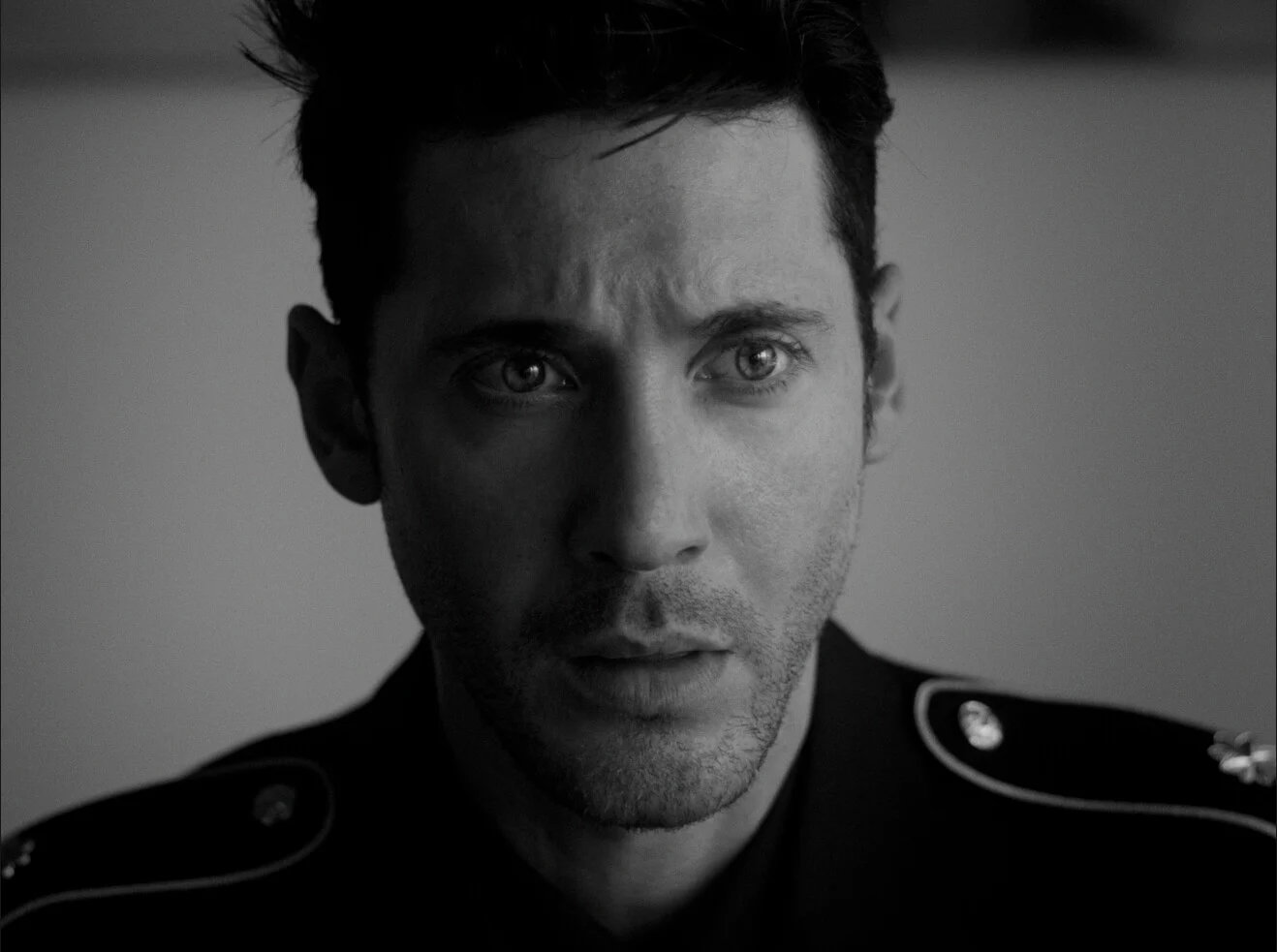
Manorath Thacker: One of the interesting things about Freddie is that his unease seems to arrive before the catastrophe itself. How did you play that distinction? How do you show a character intuitively sensing danger without making him seem like he just knows the plot is about to happen?
Guy Kent: I think we’ve all had that feeling where nothing is obviously wrong, but something just doesn’t sit right. Freddie certainly doesn’t know what’s coming. There’s just this low-level unease, almost an intuition, and I find that much more interesting. You walk into a room, and something is just off.
And then, of course, something is in fact very off.
But I liked that it begins almost imperceptibly. He’s not afraid yet. He’s just paying attention. Freddie is someone who trusts his understanding of the world, so when something doesn’t quite fit inside it, I don’t think his first instinct is fear. It’s curiosity. He wants to understand it.
And there’s something dangerous about that, because curiosity keeps you looking at the thing you probably should be running from.
Manorath Thacker: Freddie eventually encounters something that challenges his understanding of reality itself. As an actor, how did you approach scenes where the character may be experiencing something spiritual, psychological, or genuinely otherworldly? Did you need to decide privately what was "real," or was the ambiguity itself the most useful thing to play?
Guy Kent: I don’t know if I want to answer it. [laughs] I think the moment you decide it’s supernatural or psychological or spiritual, you make it smaller.
It can be grief. It can be trauma. It can be God, or a god. It can be something completely unknowable. I don’t think those possibilities necessarily cancel each other out.
Freddie is confronted with an experience for which he has no vocabulary, and I think that was the thing to hold on to. He doesn’t get to step outside of it and decide what it means. He just has to survive the fact that it’s happening.
And I never really wanted to solve it for myself, because I think not knowing is part of what gives it its power. The second you put a name to it, you’ve given yourself a way of containing it. Freddie doesn’t have that luxury.
So no, I don’t know what it is. [laughs] And I’m very happy not knowing.
Manorath Thacker: This isn't the first time you have collaborated, and that creative history can produce a useful shorthand. For Aurora, what conversations could happen almost without words because of your existing trust—and, conversely, was there a moment when one of you deliberately challenged the other's instinct in order to push Freddie or the film somewhere more uncomfortable?
Angad Aulakh: Because we had worked together many times before, there was already a level of trust that allowed us to strip things away and be direct. A lot of the conversations around Freddie were really about trusting silence, trusting stillness, and trusting that the smallest shift in his face or body could carry more weight than another line of dialogue or an overt gesture.
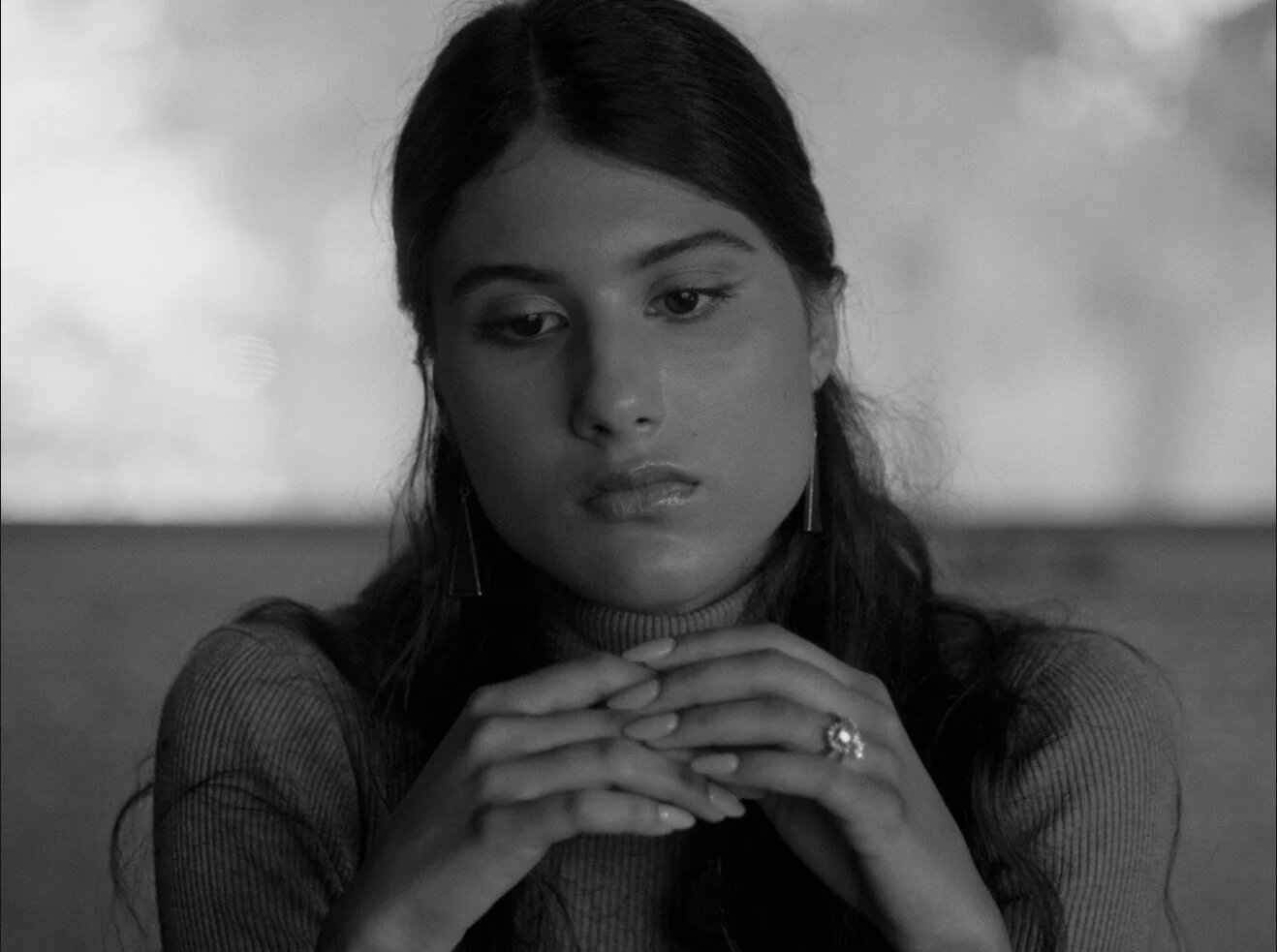
That was especially important with this character because so much of the film is about isolation. We did not want Freddie constantly explaining what he was feeling. In many ways, the performance had to live in the negative space. The fear, the exhaustion, the memory of his wife, the sense that something impossible may be happening around him: all of that needed to register without feeling forced.
Guy Kent: Because of our working history together, I think we know when to trust each other and when to push. But neither of us is particularly precious about being right, which is probably why it works.
We talked about Freddie a lot before we shot, but mostly about the life you never see in the film. His marriage, his relationship to control, his grief, what he believes, what he thinks happens when we die. We probably talked about far more than could ever possibly make it onto the screen, but that’s the point. By the time we got there, neither of us really needed to explain who Freddie was.
And that history means Angad can give me very little, and I usually know exactly what he’s getting at. Sometimes it’s a word, sometimes it’s a look, sometimes he’ll come over and say something completely cryptic and walk away. [laughs] But I know him well enough to know what he’s asking for.
I think the trust is really in being willing to be wrong in front of each other. You can follow something that feels strange or uncomfortable with no need to know immediately whether it works. And sometimes that’s where you find the thing you couldn’t have planned.
Manorath Thacker: Angad, you have brought your Punjabi heritage and Sikh faith into a genre traditionally shaped by Western ideas of space exploration. How did you decide which elements of that cultural and spiritual inheritance should be explicitly visible through language, costume, and music, and which should operate more subconsciously? Was there a danger of making the symbolism feel explanatory when you wanted it to feel lived-in?
Angad Aulakh: I was very conscious of not turning the film into an explanation of Punjabi culture or Sikh identity. The moment you start stopping the story to explain what something means, it can begin to feel like it is being presented to an outsider rather than simply existing as part of the character’s life.
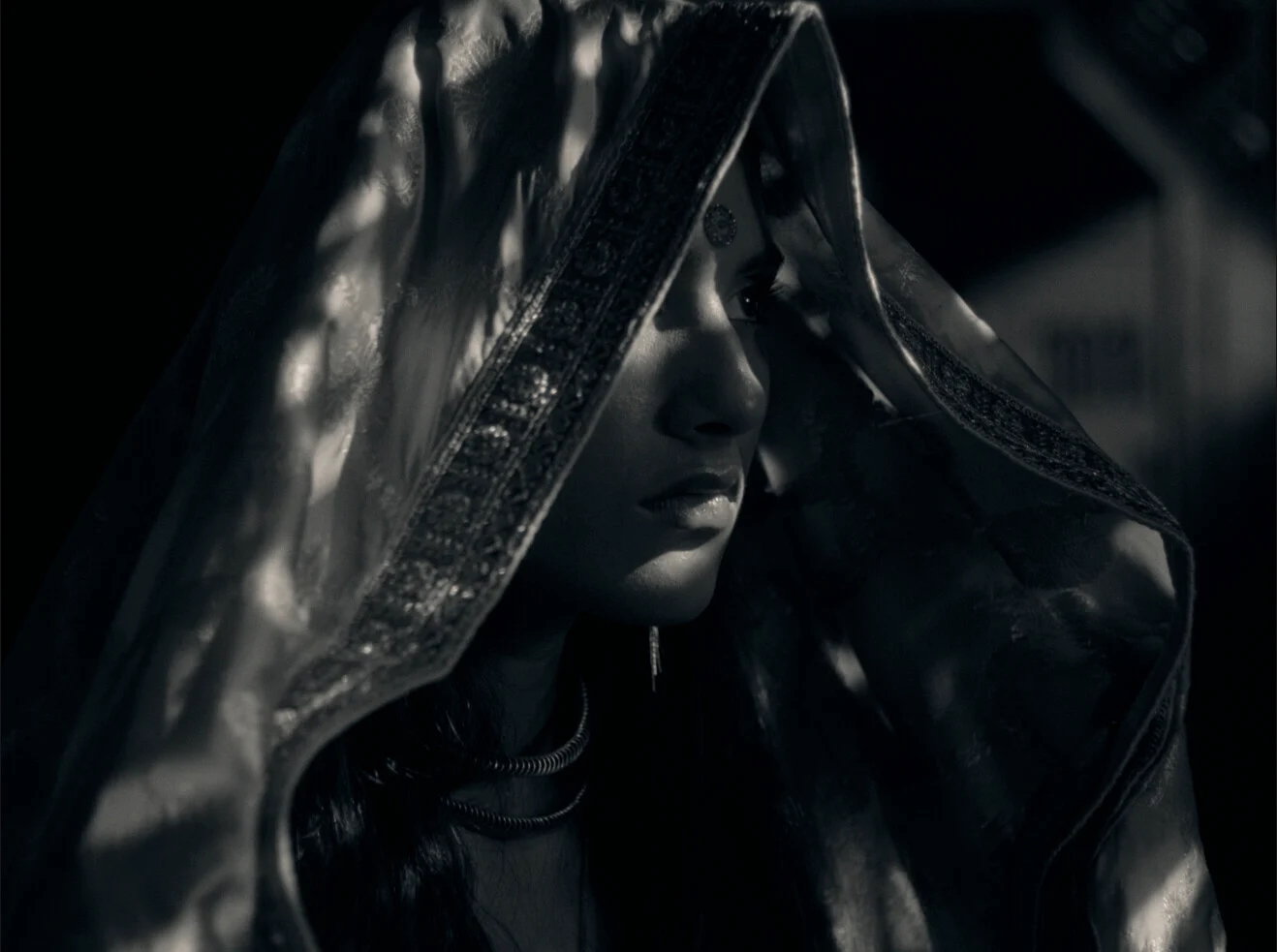
So with the language, clothing, and music, the approach was to treat those things as completely natural. They are there because they belong there. Freddie’s wife, Kirat, is Punjabi, so it’s natural for us to hear her speaking Punjabi. We hear Punjabi music inside the space station because it’s a link to Freddie’s life on Earth, something that brings him comfort and reminds him of Kirat. None of that needed to be justified to me, because that is simply part of the world these characters come from.
The more spiritual material was something I wanted to handle differently. I was less interested in making that literal or doctrinal. The film is dealing with rebirth, intervention, mystery, and forces that may exist beyond our ability to understand them, and I wanted those ideas to operate on a more subconscious and mythic level. I did not want the audience to feel that the film was telling them, “This image means this, and therefore you should interpret it this way.”
That was probably the balance I was most careful about. The cultural elements could be very specific, but the larger mystery had to remain open. I think specificity actually helps with that. The more lived-in Freddie’s world feels, the more powerful it is when something enters that world that neither he nor the audience can fully explain.
And there was definitely a danger of over-explaining the symbolism. I kept trying to resist that. I would rather an image stay with someone and mean something slightly different to them than have the film decode it for them. The universe itself does not explain everything to us, so I did not think the film should either. That also speaks to the power of filmmaking. It allows filmmakers to engage with the audience in ways that are fun and challenging. The most mysterious image in all of cinema to me is the closing image of The Shining. It was permanently seared into my mind the moment I laid eyes on it, and I’ve yet to solve its mystery. Kubrick never tells us exactly why Jack appears in that 1921 ballroom photograph, and that refusal to explain it is precisely what gives the image its power. Sometimes it is the unanswered questions that are the most satisfying.
Credit: Last Carnival
Credit: Last Carnival
Manorath Thacker: There is a beautiful paradox at the centre of Aurora: Freddie is travelling farther away from humanity than ever before, yet that distance appears to force him into a more profound understanding of what it means to be human. Do you see the "signal" as something Freddie discovers in space, or as something that was always inside him but could only be heard once everything familiar went silent?
Angad Aulakh: I see it more as something Freddie encounters than something that was simply waiting inside him, but in a way, it’s fate that he was the one who discovered its origin. The signal is important because it suggests that there may be forces, intelligences, or forms of consciousness in the universe that exist completely outside the boundaries of human understanding.
What interests me is that Freddie must be stripped of everything familiar before he can even become receptive to that possibility. He is isolated from Earth, from routine, from the people and structures that normally define his life. In that silence, he becomes vulnerable in a way he has probably never been before.
So I think the paradox is that the farther he moves from humanity physically, the closer he gets to something essential about being human: fear, memory, love, loneliness, hope, and the desire to believe that we are not entirely alone.
But I also wanted to preserve the mystery of the signal itself. There is something genuinely external reaching toward him, and that was important to me to convey. The film is asking what it might mean if the universe contained something beyond us that could recognize our fragility and, for reasons we may never understand, choose to help.
Manorath Thacker: The performance reportedly moves between restraint and more overt emotional intensity. How did you and Angad decide where to hold emotion back? In a film about isolation, was silence—and even the smallest physical detail, such as breathing, posture or where Freddie directs his eyes; as important to your performance as dialogue?
Guy Kent: I think there’s often an enormous distance between what I feel and what I actually show, and I recognized that in Freddie. He spends so much of the film trying not to lose control, and holding onto that becomes part of the tension.
Angad and I talked a lot about not getting ahead of him emotionally. There are things happening to Freddie that could justify a huge reaction, but he’s still trying to understand them, still trying to function. And sometimes the more desperately you’re trying to keep it together, the less you actually give away.
Then, because he’s alone, tiny things start to become enormous. A breath becomes dialogue. Where he looks, how long he allows himself to look at something, whether his body moves toward it or away from it. Suddenly all of that has weight.
So when the restraint eventually breaks, it means something. There are moments when Freddie becomes incredibly physical and emotionally extreme, but I think you earn those moments by resisting them for as long as you can.
Otherwise you’re at a ten from the beginning, which is probably fairly unbearable. [laughs]
Manorath Thacker: The title Aurora evokes light appearing after darkness, but an aurora is also something you cannot hold onto; it is a fleeting phenomenon created by invisible forces becoming visible. If Freddie's journey is his own aurora, what is the invisible force acting upon him throughout the film: grief, faith, memory, guilt, or something neither of you would want to name? And was leaving that final interpretation unresolved an important part of the film's design?
Angad Aulakh: For me, it is something I would resist naming too specifically. Grief, faith, memory, guilt: all of those things are present in Freddie, but I do not think any one of them fully explains what is happening to him.
What interested me was the possibility that there is an external force acting upon him that is real, but completely beyond his ability to understand. Something invisible becomes briefly perceptible to him, almost like an aurora itself. He cannot possess it or reduce it to language. He can only experience it.
That is why leaving the final interpretation unresolved was essential. The moment the film tells you exactly what the force is, I think some of the wonder disappears. I wanted the audience to be able to read it spiritually, psychologically, cosmically, or even all three at once.
In that sense, Freddie’s journey is less about receiving an answer than being transformed by contact with a mystery. He comes out of darkness having seen something extraordinary, but not necessarily having the vocabulary to explain what it was. To me, that feels much closer to the way we actually experience the most profound things in life.
Guy Kent: I also don’t know that I’d want to name it. I think the moment you do, you close off all the other possibilities.
Freddie is already carrying so much into that mission, and then he’s confronted with something that completely destabilizes his understanding of what is real. You can call it faith, or God, or first contact, or grief taking some other form. I don’t know. Maybe all of those things can exist at the same time.
And for all the scale of the film, and how impossibly far Freddie is from Earth, it ultimately becomes something very intimate. He’s confronted with who he’s loved, what he’s lost, what he believes, and what’s left when the things he’s relied on to make sense of his life suddenly don’t work anymore.
So I wouldn’t want to resolve it. I have my own ideas about what’s happening, obviously, but I’m not sure they’re any more interesting than yours. Actually, they’re probably less interesting. [laughs]
Have you seen Aurora? Let us know your thoughts about the film in the comments!

Edited By: Itti Mahajan
