
'Euphoria' Returns With a Texas-Soaked Fever Dream; But Is There Anything Beneath the Beauty?
Credits: Eddy Chen/HBO
Credits: Eddy Chen/HBO
It does not take long for high school corridors to morph into the long corporate hallways of life. Neither is it too long before one finds themselves in the carcass of their teenage bedroom’s vomit, tending to a hollow prime real estate whose rooms you do not have enough business to renovate with. Sam Levinson, however, took exactly 4 years, and some, to orchestrate the golden Texan glory he has so thoroughly bathed Euphoria's season in, for his characters to get cozy within.
The byproduct of this orchestration looks beautiful. Almost as if it were dipped in violently vibrant hues of spaghetti westerns, passed through factory mills, and stamped with overdoses of sex and drugs as mandates of an adulthood extraordinaire.
Andale, Euphoria says right upon its return to the screen, and proceeds to weave a story out of things that only ever go wrong in the lives of twenty-somethings.
The addicts of adulthood – Rue, Nate, Cassie
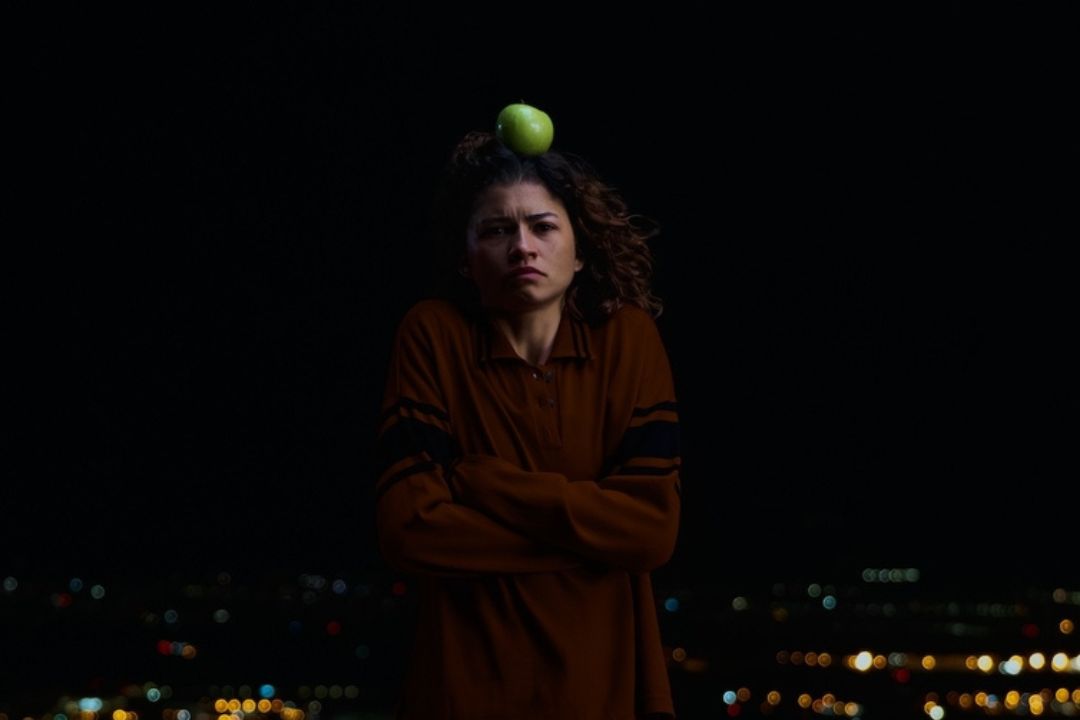
Rue, the once trembling epicenter of teenage collapse, now moves with a terrifying sense of purpose through terrains that no longer resemble the pastel-tinted hallucinations of East Highland. Somewhere in the dust-stricken arteries of Mexico, she ferries narcotics across borders, her body now less a site of addiction and more a vessel of transaction. Her trafficking of drugs is not merely a profession but a desperate run for survival.
And yet, the show insists on sanctifying it. While her contemplations run higher than ever, her near-death encounter at the hands of Alamo actually blooms into a religious awakening. Rue’s suffering is no longer just endured; it is aestheticized, canonized. The contrast might be trying to build something dangerously beautiful, but ornamentation might be as far as it goes.
Credits: Eddy Chen/HBO
Credits: Eddy Chen/HBO
Across this curated wasteland, Nate and Cassie perform a different genre of decay. Nate, now comfortably inhabiting inherited power, does not evolve so much as he expands. His violence seems to have matured into calculated risks, perhaps satisfying to be seen as quieter, colder, and more sustainable, but that is yet to be seen. He has stepped into his father’s empire but is already miserably failing to perfect it.
Cassie, on the other hand, has perfected the art of self-consumption. Her body, once a battleground of validation, is now a marketplace being prepared to be sold in fragments that masquerade as empowerment. She performs desire like a contract she cannot renegotiate. Together, they exist in a relationship so pristine it begins to feel embalmed. From the get-go, their domesticity sets the stage for the ruins to come.
And this is where the show sharpens its blade and risks dulling it at the same time. Because when ruin is rendered this exquisitely, this seductively, one has to ask: Is this critique, or just indulgence with better cinematography?
Observers, survivors – Maddie and Lexi
If Rue, Nate, and Cassie are busy burning, Maddy and Lexi have mastered the art of not getting ash on their clothes. Maddy has traded hallway confrontations for Hollywood corridors, now orbiting the polished cruelty of talent management. It is, in many ways, the most honest evolution the show offers. The girl who once weaponized an image now industrializes it. She does not fight the system anymore, but styles it, schedules it, and sells it back to itself. There is something almost admirable about her refusal to collapse. Almost.
Lexi, meanwhile, continues her quiet occupation as observer. Only now, the observation comes with a paycheck. The playwright of their adolescence has been absorbed into the very machinery she once dissected. She no longer stages lives for understanding; she organizes them for efficiency. And here lies the quiet horror of both their trajectories: they have merely extended into the reflections of high school that brought their most vicious selves out.
Missing pieces, safe puzzles – Fezco and the one yet to be unveiled
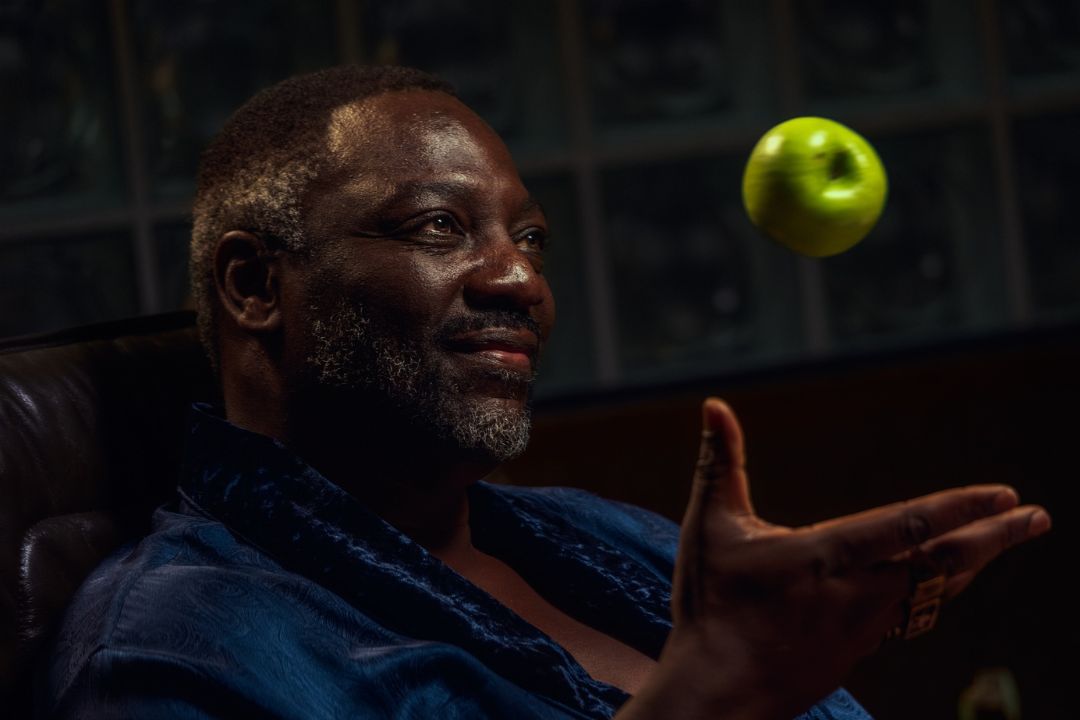
Absence, in Euphoria, does not whisper, but has burst out jarringly through Sam Levinson’s assertion of tribute. Fezco’s fate lands not with spectacle, but with a kind of brutal administrative finality, backdropped by thirty years in prison after the dug-bust that season 2 closed with. No stylization, no operatic framing, but plain consequence, all stripped bare of aesthetic mercy.
But in his absence is also a collapse of something vital. Fezco was never the loudest character, nor the most visually arresting—but he was, inconveniently, human in a way the show now seems less interested in preserving. Sam Levinson might have been adamant about the third season being a byproduct of his love for Angus Cloud, but for all the tribute, the last semblance of innocence has been cleanly edited out and replaced by spaghetti western frames.
Last but not least, Jules has simply slipped off screen, relocated into a different kind of frame: New York, art school, a life that sounds, on paper, almost respectable, almost clean. The kind of reinvention that suggests escape, only that: Euphoria does not believe in clean escapes. What trickles back to us is far more corrosive. A line, passed through Lexi to Rue, lands with the kind of offhand brutality the show has mastered: Jules is a “sugar baby.” And just like that, the fantasy of reinvention fractures, much on brand for Euphoria so far.
Credits: Eddy Chen/HBO
Credits: Eddy Chen/HBO
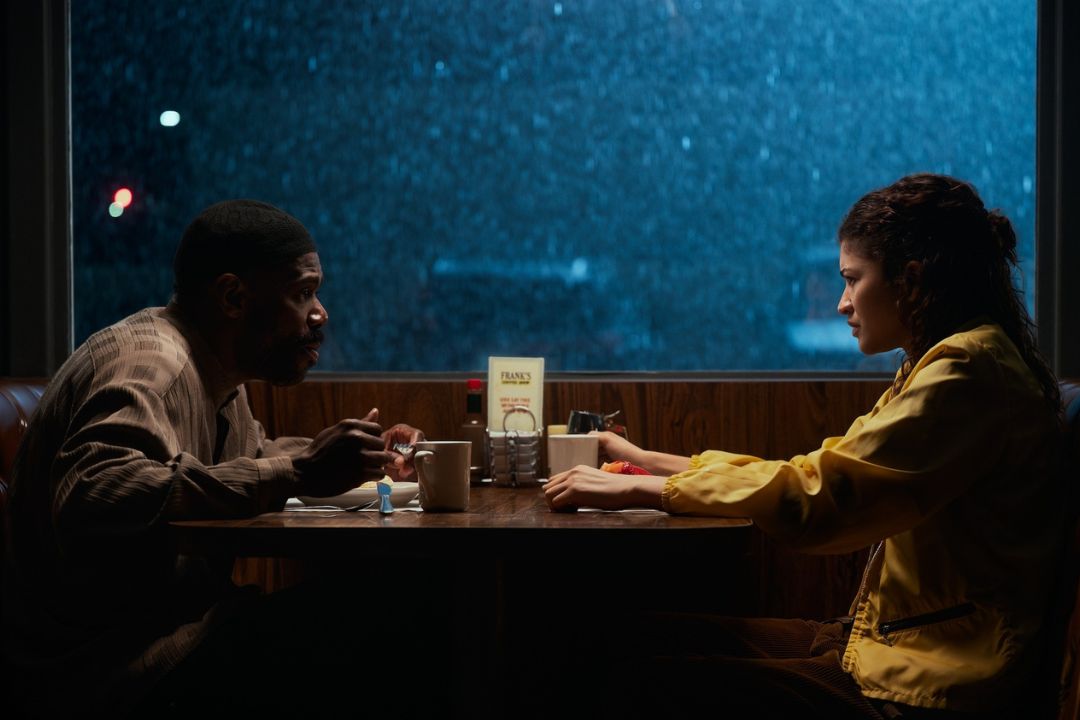
What this premiere accomplishes is not subtle at all, actually. Every vice is choreographed, every low is lacquered. S**, drugs, violence are all rendered with such obsessive precision that they begin to resemble not narrative, but product. But here is the line the show is circling and cannot afford to cross. If all this excess—this relentless excavation of the grotesque—does not funnel into something irreversible, something resembling evolution, then Euphoria risks calcifying into exactly what it pretends to critique: a spectacle of suffering that confuses intensity for depth.
Because even decadence gets repetitive. And if nothing truly changes, if no one is forced to confront the cost of all this exquisitely framed destruction, then what remains is not storytelling, but a well-lit showroom of ruin.

What did you think of Euphoria’s season 3 premiere? Let us know in the comments.

Edited By: Itti Mahajan
