
Eliot Page as Sinon: How Lore Accurate Is ‘The Odyssey’ Casting? Explained
via Imago
Credits: Imago
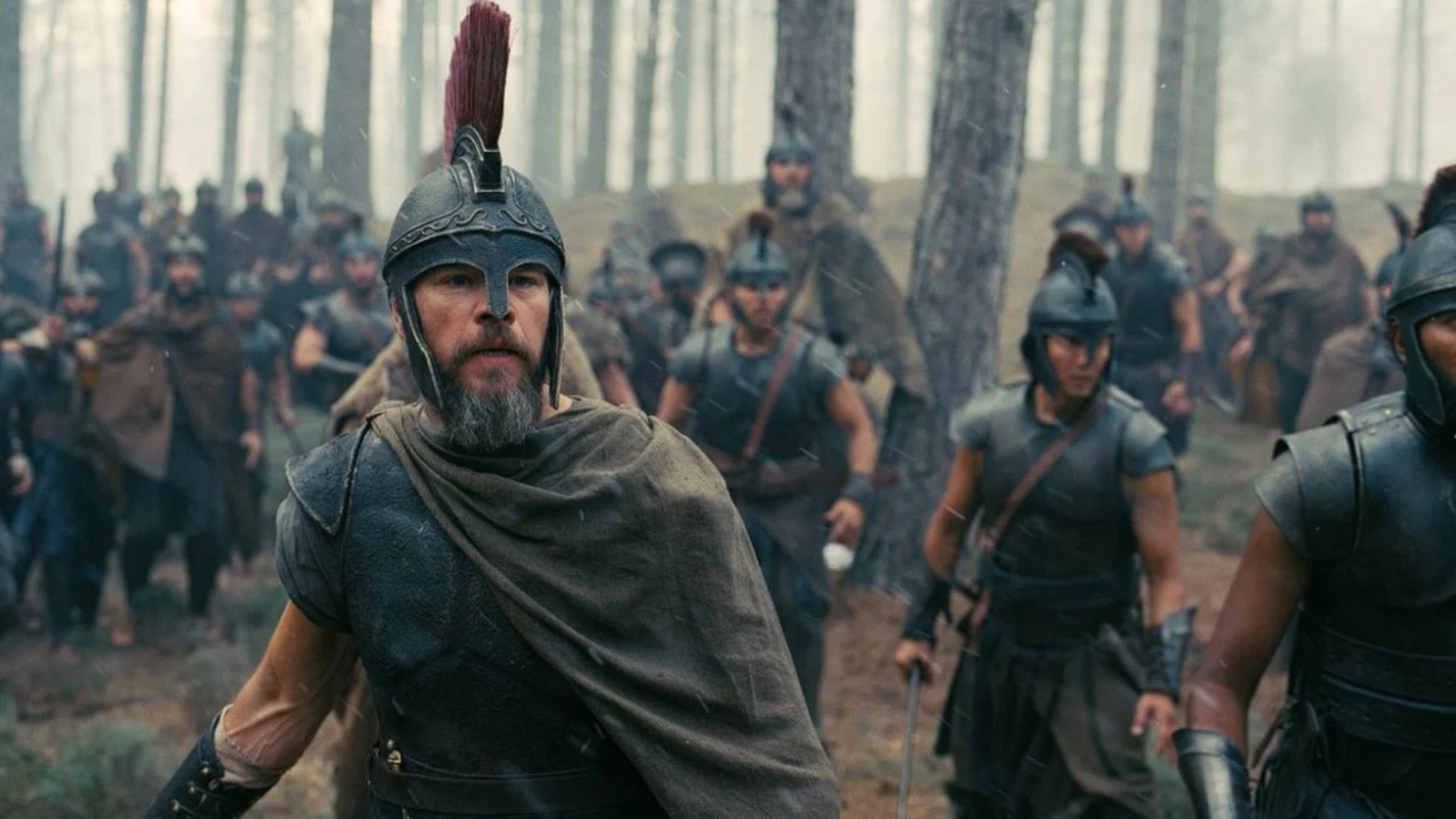
"The man of twists and turns..." That is how Homer famously introduces Odysseus, a hero whose greatest weapon was never the sword but the story he could make others believe. Throughout The Odyssey, disguises, false names and carefully spun lies become instruments of survival, proving that in Greek epic, deception could be every bit as powerful as brute strength. It is perhaps fitting, then, that Christopher Nolan's adaptation has found itself at the center of a different kind of deception, with Lupita Nyong'o's casting and Elliot Page's role as Sinon igniting fierce debates.
The bigger question, however, is not whether Nolan is rewriting mythology. It is whether he is following the literary lineage that has existed for over two millennia, even if that lineage extends far beyond Homer's original poem.
Like archaeologists brushing centuries of dust from ancient ruins, the answer lies in separating Homer's Odyssey from the many myths that grew around it afterward.
ADVERTISEMENT
Article continues below this ad
Sinon never appears in Homer's Odyssey, and that changes everything
One of the biggest misconceptions surrounding Elliot Page's casting is the belief that Sinon is an established character in Homer's Odyssey. He is not. Homer's epic begins after the fall of Troy, following Odysseus' perilous ten-year voyage home to Ithaca. While the Trojan Horse is referenced through memories and songs, Homer never introduces the Greek soldier who orchestrated its greatest deception. In the original Greek text, Sinon simply does not exist.
The character instead enters literary history centuries later through Virgil's Aeneid, the Roman epic composed in the first century BCE. It is in Book II of the Aeneid that Sinon emerges as one of classical literature's most effective manipulators. Pretending to be an abandoned Greek captive, he spins an elaborate tale that convinces the Trojans the giant wooden horse is a sacred offering to Athena. His performance persuades them to drag the horse inside Troy's walls, unknowingly inviting their own destruction. In Virgil's version, swords never win the city. Words do.
The Odyssey has always been a story about what survives after legends are written. Nolan's version seems equally interested in the stories that slipped between the pages.
Christopher Nolan appears to be building the entire Trojan saga
The Odyssey is not a page-by-page adaptation and instead is a cinematic tapestry woven from multiple ancient sources. Classical mythology was never confined to a single author. Homer, Virgil, Sophocles, Euripides and later writers all contributed different threads to what audiences now casually call "Greek mythology," even though many of those works, like the Aeneid, are Roman reinterpretations.
That makes Sinon's inclusion fascinating rather than contradictory. While the Odyssey largely concerns Odysseus' journey home, the emotional weight of that journey depends on what happened before Troy fell. A character like Sinon embodies the final act of that war. He is not remembered for battlefield glory like Achilles or Ajax, nor for kingly authority like Agamemnon. His weapon is persuasion. His battlefield is trust itself.
It suggests Nolan may be chasing something larger than historical fidelity. He may be reconstructing the mythology the way later generations understood it, rather than freezing it at Homer's original manuscript.
Why Elliot Page's casting may be more accurate than the internet assumes
Much of the online backlash surrounding Elliot Page stemmed from early rumors that he had been cast as Achilles, triggering debates over physicality and historical authenticity before reports identified his role as Sinon instead. Once that clarification emerged, many criticisms continued despite overlooking who Sinon actually is within classical literature.
Unlike Achilles, Sinon is never described as an imposing warrior whose presence dominates the battlefield. Virgil presents him as an ordinary Greek soldier whose greatest strength is emotional manipulation. He cries, fabricates betrayal, performs vulnerability and constructs a convincing narrative that dismantles an entire civilization's judgment.
ADVERTISEMENT
Article continues below this ad
That makes the discussion around "lore accuracy" more nuanced than social media headlines suggest. If the benchmark is Homer's Odyssey, then no actor can truly be lore accurate because Sinon does not exist there. If the benchmark expands to the broader Trojan literary tradition beginning with Virgil's Aeneid, then the defining characteristic is not physical dominance but calculated deception.
The irony is almost poetic. A character remembered for convincing an entire city to believe an impossible story has now become the center of another debate about belief, interpretation and who gets to tell ancient myths in the twenty-first century. Christopher Nolan's The Odyssey appears to be treating mythology as a living archive rather than a sealed museum exhibit.
ADVERTISEMENT
Article continues below this ad
What do you think about Elliot Page's casting as Sinon? Does Nolan's broader interpretation strengthen the mythology, or should The Odyssey remain closer to Homer's original epic? Share your thoughts in the comments.
ADVERTISEMENT

Edited By: Hriddhi Maitra
More from Netflix Junkie on Hollywood News








ADVERTISEMENT