
Christopher Nolan Had to Go to China to Finally Answer the Right Questions on ‘The Odyssey’
Christopher Nolan bei der Premiere des Kinofilms Interstellar im AMC Lincoln Square Theater. New York, 03.11.2014 Foto:xD.Tinex xFuturexImage
Christopher Nolan bei der Premiere des Kinofilms Interstellar im AMC Lincoln Square Theater. New York, 03.11.2014 Foto:xD.Tinex xFuturexImage
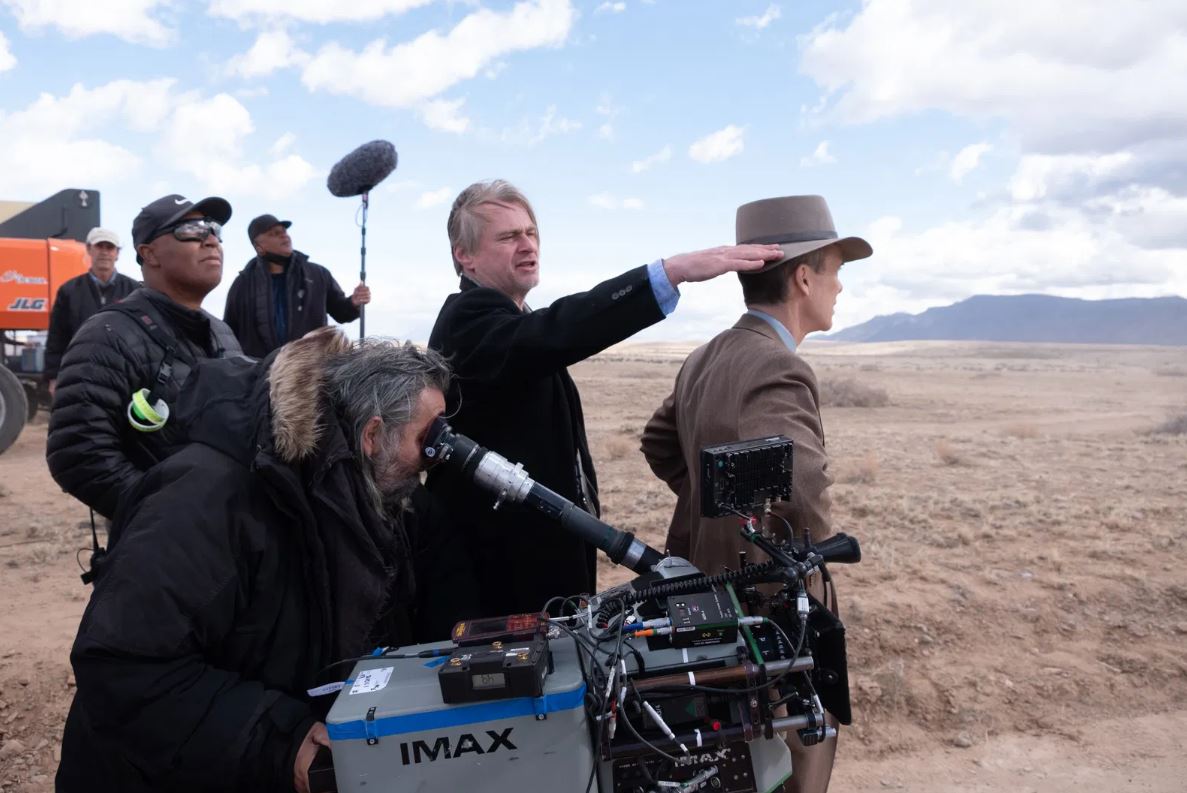
Months after The Odyssey dominated headlines and following a marathon of blockbuster interviews across Hollywood and Europe, Christopher Nolan found himself in perhaps the most intellectually demanding conversation of the film's campaign in China. Instead of discussing IMAX cameras, practical effects, or star-studded casting, the discussion turned toward ancient philosophy, the Bronze Age collapse, and the moral architecture of Homer's epic. It was a reminder that sometimes the most revealing interviews happen far away from the traditional promotional circuit.
The conversation quickly became a talking point among film fans, not because of flashy revelations, but because it treated Nolan less like a celebrity filmmaker and more like a scholar unpacking one of literature's oldest surviving stories.
Why Christopher Nolan's Chinese interview on The Odyssey has captivated film fans
ADVERTISEMENT
Article continues below this ad
The interview was published on the Chinese video platform Bilibili and conducted by Chinese podcaster and philosophy lecturer Zhong Shu. Questions centered on hubris, civilization, the Bronze Age collapse, atonement, and the philosophical underpinnings of Homer's Odyssey. Nolan responded by connecting Homer's narrative to the historical distance between the Trojan War and the period in which the poem was composed. He explained that what fascinated him was "that idea of a cycle" and a civilization looking back at one that was "more advanced than theirs."
via Imago
Credits: Imago
He explained on the podcast with Zhong Shu that what fascinated him was a civilization looking back at an even greater civilization that had already collapsed. Rather than presenting history as a straight line of progress, he spoke about cycles of rise and decline, suggesting that this perspective shaped his adaptation. He also acknowledged that working on Oppenheimer, a film preoccupied with humanity's capacity for self-destruction, naturally informed the emotional lens through which he approached The Odyssey.

The exchange only became richer as the discussion moved from history to morality.
Hubris, hospitality, and why Christopher Nolan sees ancient mythology speaking to the modern world
One of the interview's central themes was xenia, the ancient Greek principle of hospitality and mutual respect. Chris Nolan explained that he focused heavily on this idea while developing the film, describing it as the ethical foundation that holds civilization together. Rather than treating the story as a tale about divine punishment alone, he framed the suitors' actions as a violation of that moral code, one whose consequences ripple throughout the narrative.
ANNE HATHAWAY and TOM HOLLAND in THE ODYSSEY (2026), directed by CHRISTOPHER NOLAN. Copyright: xSyncopyxProductionx xUniversalxPicturesx xAlbumx alb28505395 EDITORIAL USE ONLY
ANNE HATHAWAY and TOM HOLLAND in THE ODYSSEY (2026), directed by CHRISTOPHER NOLAN. Copyright: xSyncopyxProductionx xUniversalxPicturesx xAlbumx alb28505395 EDITORIAL USE ONLY
ADVERTISEMENT
Article continues below this ad
The conversation also explored hubris and whether greatness should always be accompanied by apology. Nolan carefully avoided reducing Odysseus into either a flawless hero or a man seeking simple redemption. Instead, he argued that audiences inevitably bring their own expectations into heroic storytelling. He also reflected on cinema as a universal storytelling language, noting that filmmakers constantly balance tradition with innovation while relying on conventions that audiences instinctively understand.
Few blockbuster interviews wander this comfortably through Greek philosophy, film grammar, and civilizational decline, which is precisely why this conversation has resonated with so many viewers. If this is any indication, The Odyssey is inviting discussions that extend far beyond the screen.
ADVERTISEMENT
Article continues below this ad
What did you think of Christopher Nolan's philosophical conversation about The Odyssey? Share your thoughts in the comments.
ADVERTISEMENT

Edited By: Adiba Nizami
More from Netflix Junkie on Hollywood News

ADVERTISEMENT