
[INTERVIEW]: 'Call It All Love' Creator Leonardo Cecchi Opens Up About Inspirations, Exploring Humanity in Criminals, and His Dream Superhero Role
Credits: Still Moving Pictures
Credits: Still Moving Pictures
One of the most beautiful feelings one can feel as a viewer in Hollywood is watching stars from Disney TV shows turn into phenomenal storytellers, especially when the stories they decide to tell are complex, real, and most of all, important. And at HollyShorts 2026, on the path to nailing every aspect of it, Leonardo Cecchi delivers a phenomenal short film inspired by an actual interrogation of George Huguely, the culprit in the gruesome murder of Yeardley Love at the University of Virginia in 2010.
Existing in the same space as Netflix's hit Adolescence and the famous Monsters series by Ryan Murphy, the film explores the reasons why someone is pushed to such an extent where someone commits such a horrific deed. Cecchi desires to start conversations about things that society usually ignores, and in doing so creates a piece of cinema that refuses to be easy and comfortable, but forces you to sit with a little bit of uneasiness and digest the full story even when sympathy feels almost impossible to find. Putting on three hats — writer, producer, and actor, playing George V, Leonardo Cecchi has done a phenomenal job, aided by an amazing directorial debut for David Mazouz.
In an exclusive conversation with NetflixJunkie, Leonardo Cecchi delved deeper into the inspirations behind choosing this particular case for his project, his collaboration with David Mazouz, finding humanity in characters who would otherwise be detested, and even his dreams of a future superhero gig.
Manorath Thacker: First, congratulations to you on your movie's debut at HollyShorts. And how was the experience at the festival? How did people like your movie? What were their reactions?
Leonardo Cecchi: Yeah. So we had our premiere last night, which was very exciting. And so far, with all the filmmakers there, it's heaven, really. Because so much of my work in creating independent projects is finding the right people, and that takes time, right? You have to reach out. You have to look for them.Here, we're all in one place. So that's really cool. You can get to talk to a bunch of like-minded artists, very talented artists. So it's been really inspiring, very cool. There's also a lot of panels, people giving their wisdom on how to navigate the industry beyond your indie short, which is really, really cool. And yeah, I'm so grateful for the opportunity to be a part of this and that this even exists.
Manorath: Yeah. Sounds really good. Like, I just wish I could have been there in the audience to see this on a bigger screen, compared to the small screen at my home.
Leonardo: On that note, I mean, I underestimated how cool it would have been to see it on the big screen. It's just, you know, there are a lot of filmmakers who talk about the value of seeing a project on the big screen. And I get it because I'm a filmmaker and an actor myself. But after putting so much work into creating this project, I edited it myself as well, with the guidance of David Mazouz; he's the director, obviously. But then seeing it on the big screen, and in a theater where the audio, the sound, was so immersive, it was just such a different experience from anything I experienced at home on my computer, you know, like you may have seen it on your computer. Yep. So it was such a testament to, wow, this has another element of experience that we got to remember is important.
Manorath: So, the Murder of Yeardley Love was a rather infamous incident because it was something that shook not only people in the USA, but people worldwide; the news was that big, that horrific. And your movie explores how privilege affects people, not only the people who have that privilege, but people around them. So what was your reasoning? How did you land on this idea that you want to explore this particular case, this particular aspect of that interrogation? What pushed you towards it?
Credits: Still Moving Pictures
Credits: Still Moving Pictures
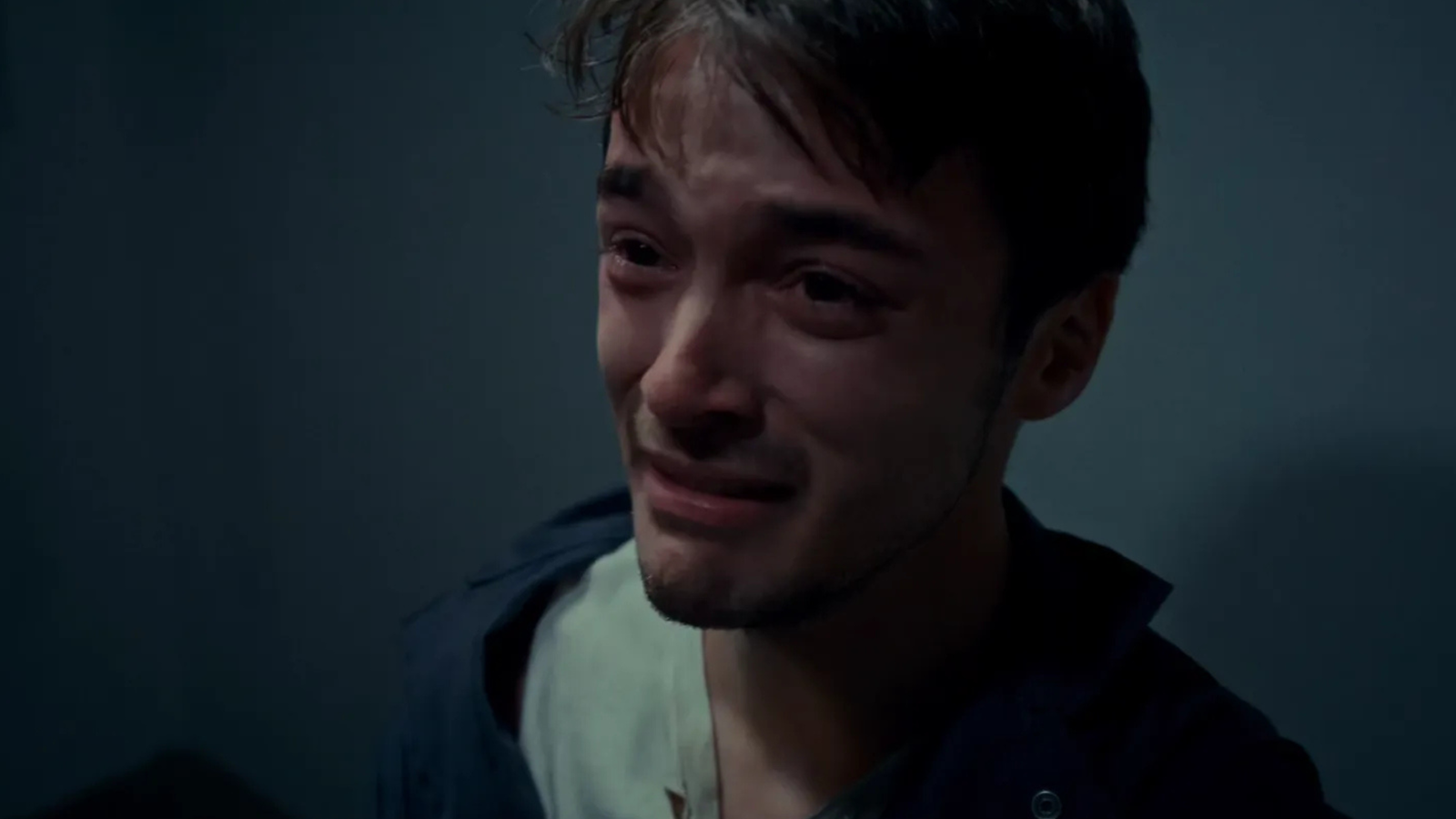
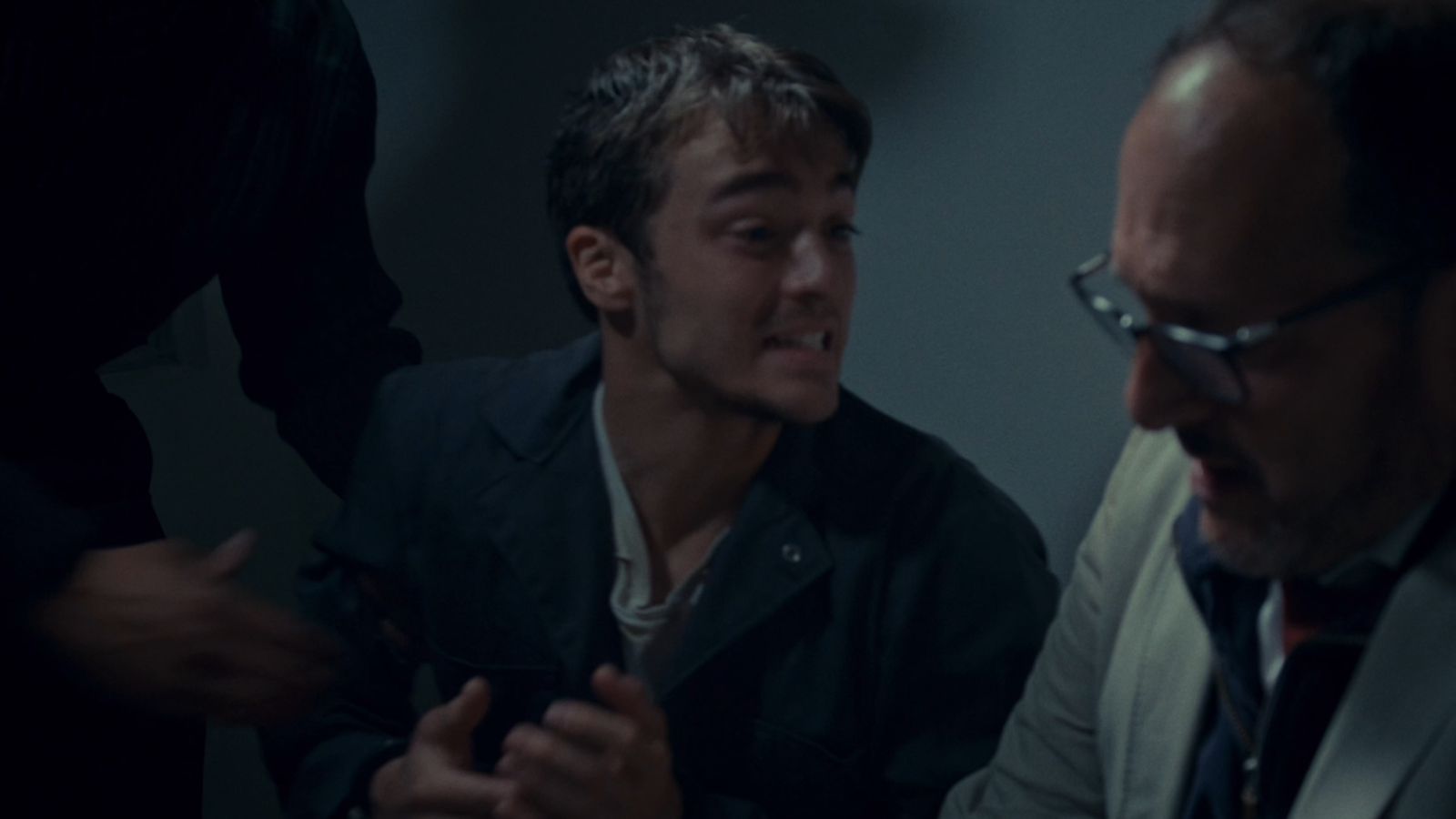
Leonardo: Yeah, what a great question, because you really hit the nail on the head in terms of what this story explores. That is exactly the angle we chose to explore. It's how that background, that wealthy background, that privileged background influences how you perceive the consequences of your actions, and what responsibility the people around you carry in a situation like that. What drew us to it actually all started from a YouTube video because we saw the interrogation of George Huley, which is available online- the full interrogation. And there was a video that was breaking down the case. And we found it extremely interesting how this young man had no idea he had killed someone, walking into this interrogation with such a demeanor. He's so relaxed, nonchalant.And then you can see when he realizes they tell him how bad he had done it; his whole world just collapses onto himself.
He obviously remembered that there was a physical altercation. He remembers the fight, but he had no idea that it actually went that far and that she was found dead. And so you see this young, privileged man who just had such a demeanor, you know, up to a few minutes ago, then suddenly his whole world collapses. And you see a terrified 22-year-old who is faced with the consequences of his actions, having ended someone else's life, having likely, in a way, changed his life forever. He had a very promising future as well, and that is all out of the window. And it just made us wonder, well, how do you get to that? How does that happen? Right. And I think that's one of the most fascinating things about projects like Adolescence, Dahmer, Menendez Brothers that are very big on Netflix. And it just makes us think, well, we understand this person before we judge them, because ultimately they are still human. George Hewley is still human, though. He committed a terrible crime. So our goal isn't to was never to absolve him of this crime, but to understand him before we judge and then make your own judgment, make your own, you know.
Manorath: The movie seems to have a very layered commentary on casual sexism that exists within the society: we see a male juror not only defend the boy who committed a murder but also advocate for an easier sentence while a female juror has to step in and take a stand for Yeardley, similarly we see George's father casually calling his wife names with no good reason, and also how the mother is the one who has to come into light and be the face that answers, while the father is once again absent. Can you dive deeper into these portrayals?
Leonardo: Yes. So, about the casual sexism that you noticed, I appreciate you noticing that, and I wish every viewer were like you, because that is exactly the intention we put into our short movie, because that is part of this culture, right? It's a very male-dominant culture that just doesn't take into consideration the other sex and how that can affect the life around you and how to navigate that respectfully and properly. And so there are many layers to this, as you mentioned. The first one is also how George's father speaks about his mother, with some very harsh lines towards her. And that, interestingly, always gets a chuckle out of the audience, right? But as you said, it's very intentional that we chose to use that language, because I believe such a demeanor, such an attitude towards women, can't happen if you don't have that as a model somewhere. You learn these things; you're not born with them. And so we just fictionalized, obviously; this is, you know, it's fictionalized based on true events, but we fictionalized, well, where could George have learned this from? There are many places, but one of them could have been his father, and so we wanted to show that, practically, obviously, in a 14-minute short, where that could come from and what that would look like.
Because, again, we don't think these things are born in a bubble. It always comes from somewhere. And then, like you said, again, you know, the woman has to pick up the pieces. A theme in the art that I like to create is that men are really good at being avoidant, very good at creating chaos and then leaving. And women are usually there to pick up the pieces, and it's a heroic action that happens all the time. And, yeah, that is exactly what we wanted to make people think about. It's a tragedy. And it keeps on getting repeated in society, where men keep doing these things, and women usually have to be a few steps ahead and have to put the pieces back together. Yeah. They basically have to clean the mess. Which is so unfair.
Credits: Still Moving Pictures
Credits: Still Moving Pictures
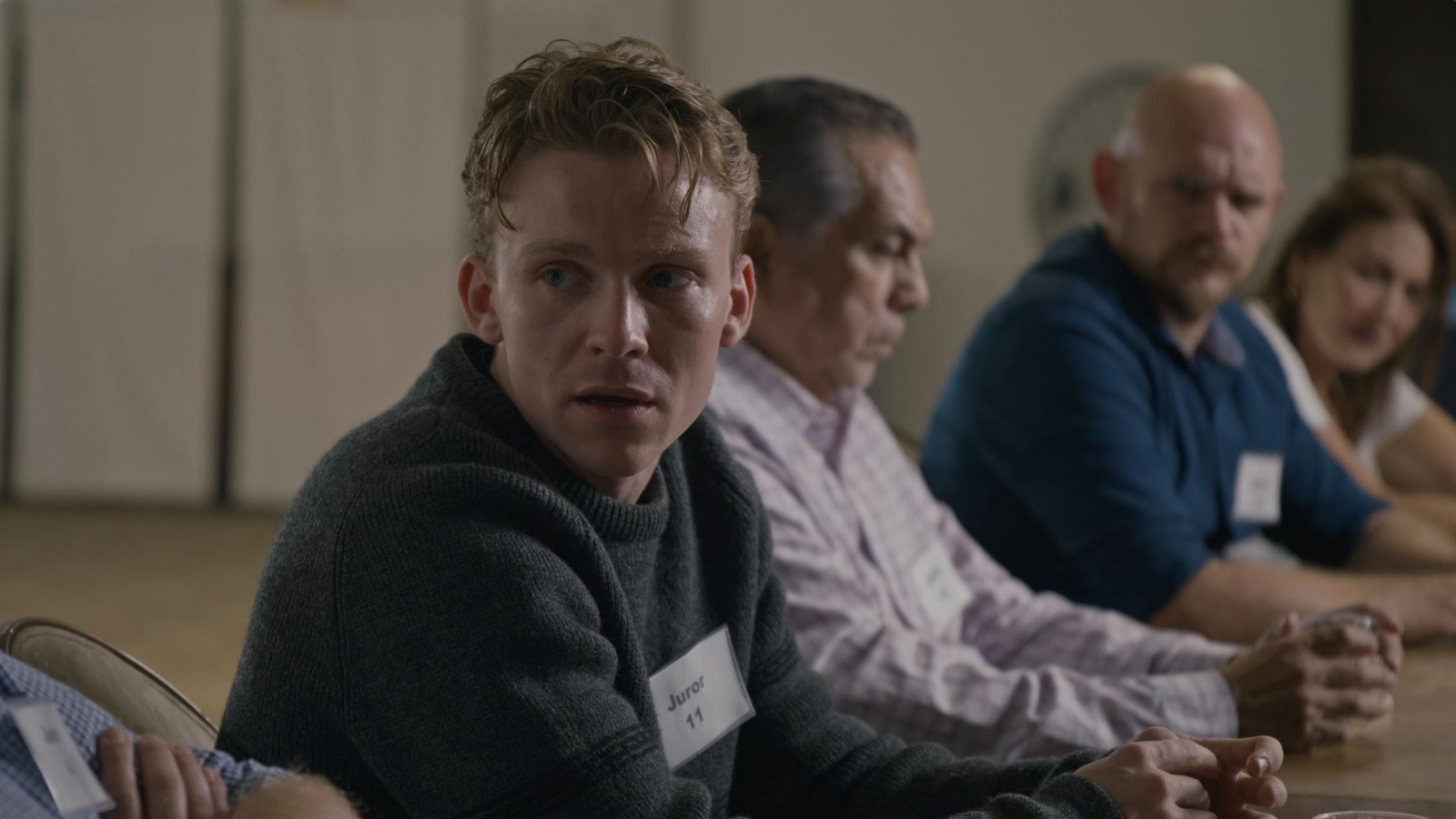
And in the courtroom. Because you nailed it there as well. We wanted to have that perspective because a lot of young men don't realize the responsibility and consequences. There was a line that Juror Number 11, I think, says that George is not a dangerous man. And then the woman, Juror 7, says, "What do you know about danger?" Because that's the thing, right? A lot of people in society don't think that a promising young college athlete- attractive, handsome, rich- is a threat. But he was. He is. And so I think there's a lot of ignorance and assumptions that happen in society that people just don't realize.
You can't just judge a book by its cover, which is similar to Ted Bundy if you think about it. I'm not comparing the two criminals, but I'm just saying looks can be deceiving. And society does have a responsibility in this. And that is the sexism that is also layered in there as well.
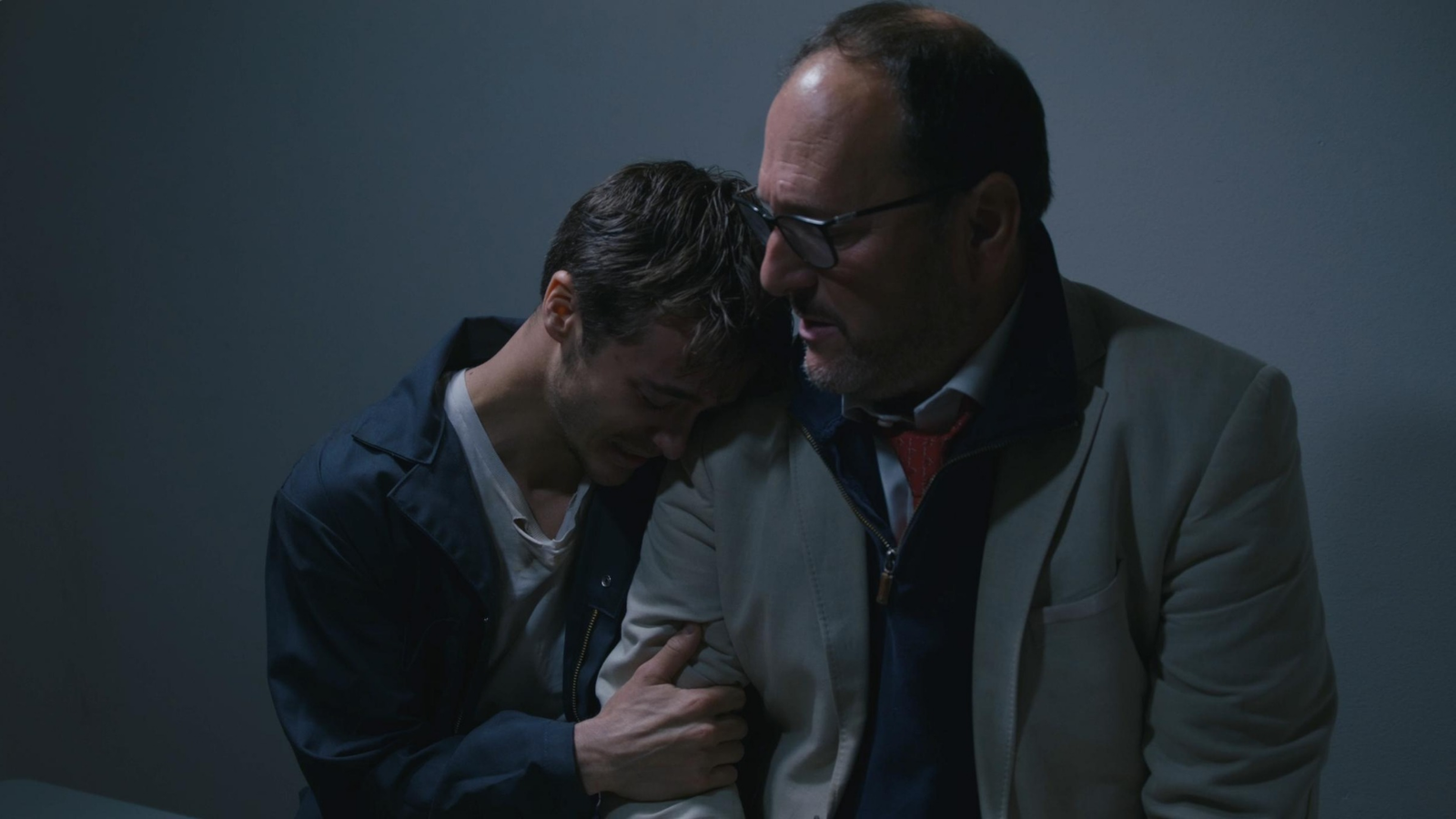
Manorath: The relationship George and his father have is anything but ordinary, at one hand, they are joking right at the beginning when they meet, which slowly turns into these weird questions from his father about getting assaulted in prison. And even George’s fun demeanor grows numb, and he is visibly afraid of his father before he questions him about his absence from his life. In those few minutes, you were able to give so much about their life, because George is clearly very disturbed, and even though we know that he has committed a very gruesome crime, you feel a sense of sympathy for him in that moment, looking at the the way he is treated by his father. What was the thought behind that interaction?
Leonardo: Yeah. That's pretty much the heart of it. That's the heart of the short movie. And that's what we feel is the thing that sets us apart. And again, it's a shared factor with these shows like Adolescence and Dahmer- these types of shows that really choose to look at the humanity before the crime or despite the crime. I mean, the crime is there. We're not ignoring it. As you said, it's a very gruesome crime, and this is something you don't ignore. But there is a human still behind that. What does that look like? And that is a little bit morally uncomfortable, right? Because I think as a viewer, I want to feel sympathy for this guy because of the crime he committed. But we are challenged to understand this human. Can a human make a terrible mistake and regret it? Can we understand where this terrible mistake comes from? And can we not absolve them, but understand them just a little bit better? And so that's the heart of the short. That's really where it all comes from. And, as you said, we wanted to create a relationship.
It's obviously fictionalized because we weren't able to speak to the people. But we wanted to create a plausible relationship that could have been. And so we wanted, and my friend David Mazouz co-wrote this with me, and he directed it. He had a big influence in this because he, just with his background, had a lot of experience being around circles- very wealthy circles, very generational wealth- with people with generational wealth. And he noticed these patterns of this type of behavior. It's this performance, almost, right, that you can see from George's father from when he comes in, right? It's almost an act. And you have this young man, like you noticed, who has spent two years in prison now, at this point, before his sentencing, after he committed the crime, reconciling with the consequences of his actions. So we believe that George comes from that mentality and that behavior, but he's now had two years to reckon with his actions and reconcile with them. So we wanted to see a young man who is challenging himself and, where he comes from, having this conversation with his dad and demanding more than just the one-layered shit talk. So yeah, that's exactly where it all comes from. And we wanted to see, well, of course, in a short amount of time, we wanted to show you this relationship. What it was, right- this banter, this bro-fratty banter that goes into George needing more and shows the avoidance and deflection pattern that the father may have had. Whereas it's all about me. I am also suffering in this way. It's true. Probably, as a viewer, it comes off as, " Okay, this dad is all about himself." But think about it. There's also some humanity in that. This is still a man whose whole life, everything he's built, society-wise, reputation-wise, is all tarnished by George's actions. Now people may think, well, that's not important in the context, and I could arguably agree, but this is still a human who is going through that. And we wanted to portray every narrative, every person, truthfully to what they actually might have been going through.
Yeah, I think it's understanding. I don't know if cut some slack is the right way I would describe it. It's just understanding, right? It's just putting back that preconceived judgment.
Credits: Still Moving Pictures
Credits: Still Moving Pictures
Manorath: You already talked about your experience with David Mazouz- you know, what he brings in with his vision about how he has observed people with privilege. And who better to talk about privilege than a man who has played Bruce Wayne? Let's be honest. And his work has been commendable. I'm not able to talk to him, but I would really love it if you could pass on this message. The cinematography of the film feels nothing short of a feature film; the camera angles used, movements, and the way feelings of sadness, anger, and even disgust are captured are truly amazing. How would you describe the process of achieving it, alongside him?
Leonardo: David is awesome. This was actually his directorial debut. So I'm so proud to be a part of that and have him have his stage in a way to actually express himself and do this craft with him. That was really special, really cool. And obviously he's been acting his whole life, so in terms of performances, we are both Meisner-trained actors. So we actually met through an acting school. And so I felt really solid with my work, and he trusted me a lot with my work. But once in a while he would give some notes and some hints to steer me in the right direction or in a different direction, just so we would have options in post. And you could tell that he's a seasoned actor because everything he would say was very aimed, not wasteful, and very deliberate and very effective. And I could see this also with other actors there on set as well. He was very good at working with actors. That was really cool to see.
I'm so glad that you enjoyed the cinematography and the direction, because when we were shooting, that cell was the tiniest room you can imagine, right? It was so tiny. So that doesn't give a director a lot of options. Where do I put the camera, right? But we were able to be creative with that. And I wasn't doing anything. I was just acting that day and producing. But he was able to be creative with that and create some options. And I think in the edit, seeing it on a big screen, I think we really…him as well because he was so influential in the editing process. He was very deliberate about, okay, which shot, right? When do we use this shot, and when do we use that shot? Because our time was limited. Our budget was limited on this. We didn't have days to shoot this. We shot that in a day, the prison sequence. And so it was very interesting to see also his directorial vision on, okay, when do we use this shot?
One of my favorite shots personally, just I would say a shot that I find very interesting- is George's mid shot. The reflection in the background and his shadow on the wall as well. And I thought that was so…I'm so glad that he had this idea to use that in the middle of the shot. Like, we don't lead with that. I think that's one of the most interesting shots, and someone could lead with that. But no, he chose to use some shots. He said, "Let's wait to use this at a specific moment." And I think that was very smart of him. And also, we have a very wide shot that's all the way up above. And we use that only once, you know. A top-angle shot in the cell. So it was awesome how we could be creative with that, and how David had this idea to also maximize that in the edit. So it was awesome working with him, and I hope he keeps doing this because he's really good.
Manorath: The movie ends with a sort of press interview with the mother, and even though she looks like, she is sad and is paying her tribute to Yeardley, it seems like she says the wrong name. Which, in a way, is a commentary on how, for the rich and privileged, people beneath them are mere names. Did I get it right, or am I just grasping at straws here?
Leonardo: You definitely hit something. To me, the whole thing was such a deliberate choice. David really insisted that we ended on that note and I found it was one of the weirdest moments of that interview with the mom. Because it almost seems she can't get it out. She can't get out the fact that Yardley is gone. And as you said, she just rushes over the name. It's not even that clear. And it's a very weird interview. And it comes, again, to that privilege and that background of having to reconcile with the consequences of someone's actions. I mean, it almost seemed to me, from human behavior, that she didn't want to admit that this even happened or that was the reality. Now, it could be from a point of view that it's just really hard to say something like that and to admit it. But it just shows you, again, there is no peace. There is no acceptance.
There is no presence in that. It's a very there's a bit of a distance, right? There's that distance that you can tell can have a connection with the financial position and background that someone has. So, yes, it's a very interesting and a bit weird interview. And we wanted to end on that note. Manorath: Yeah. So, yeah, that was really something. And because, you know, the way the movie ends, it leaves you with a lot of questions. You have a little soft towards the mother because she has gone through a lot as well. She was there for her son, visiting him and trying to be a present mother. But at the end, you drop the ball on her as well, because she is also not willing to admit that her son can do something this horrible.
Leonardo: Yeah. Isn't that wild? Yeah, exactly. And that's one of the things we wanted to do. We didn't want to give answers. We didn't want to give answers. We just wanted to give perspective. We want to give information and let the audience make their own decision. But as you said, that's the last twist that I don't know. I mean, I hope audiences notice it, because that is exactly it. It's not even this figure that you can absolutely absolve of that. Yeah.
Manorath: Watching you in the jail and flashback scenes, you vividly remind me of a young Ethan Hawke from his Dead Poets Society or early rom-com days. Would you be down to follow in his footsteps and maybe make or be in a rom-com?
Leonardo: That is such a funny thing that you're saying, because I'm developing a rom-com myself, believe it or not. So that is 100% the path I want to follow. Because I love making short movies, but I would like to venture into the feature film space. And so I'm actively working on producing a feature film that I have already written. I mean, the pitch deck is done. Everything is ready. I'm starting to tease it on social media. So if people want to follow along the journey, please follow because you're hopping in early, and you can see someone who has a vision and is hopefully able to execute it. But no, I've been teasing this recently on social media. I got a lot of interest already. I would be acting opposite my Disney co-star because I started on a Disney show. So we would be acting opposite each other again, which people are really excited about. So yes, to answer your question, I will do a rom-com.
Absolutely. Yeah. That's a reunion I'm down to.
Manorath: I wanted to ask you whether you want to go into feature films, since we saw this year, right? How indie films took off, whether it was Obsession or Backrooms. These directors, I would say; they did not have that much leverage in the industry, but they were able to do something really good. So, I wanted to ask you as well whether you will be down to feature films. But yeah, as you said, a rom-com is waiting for us, and I'm waiting for you to talk about it whenever it is out.
Leonardo: Yes! I'll update you as soon as I have updates on that. And 100% seeing what creators are doing in this space in terms of features is very inspiring. So I could speak for hours about the inspiration that I feel, the ambition, the drive I feel. It's a very exciting time to be a filmmaker right now.
Manorath: Lastly, I was going through your Instagram, and I saw you are obsessed with gymnastics and acrobatics. I know you love Spider-Man, and you had eyes for an action superhero series. So now we have the DCU that is building up, and we have Marvel, who is coming out with their X-Men. So, is there a role you want to play? Is there a superhero that you have your eye on?
Leonardo: Yeah. It's always been Spider-Man. Tom Holland is absolutely amazing. So I don't know how that would work. But, like you said. My eyes get watery every time I think about it, because it is one of my biggest dreams. Spider-Man is definitely one of them, or, you know, a different superhero. You never know how life works. Right. But if I could just write it out and have it happen as a dream, Spider-Man, I think that would be an amazing role to play.

Have you seen Call It All Love? Let us know your thoughts in the comments!

Edited By: Aliza Siddiqui
