
'Black Swan' vs 'Whiplash': Comparing The 2 Iconic Movies About Obsessed Artists
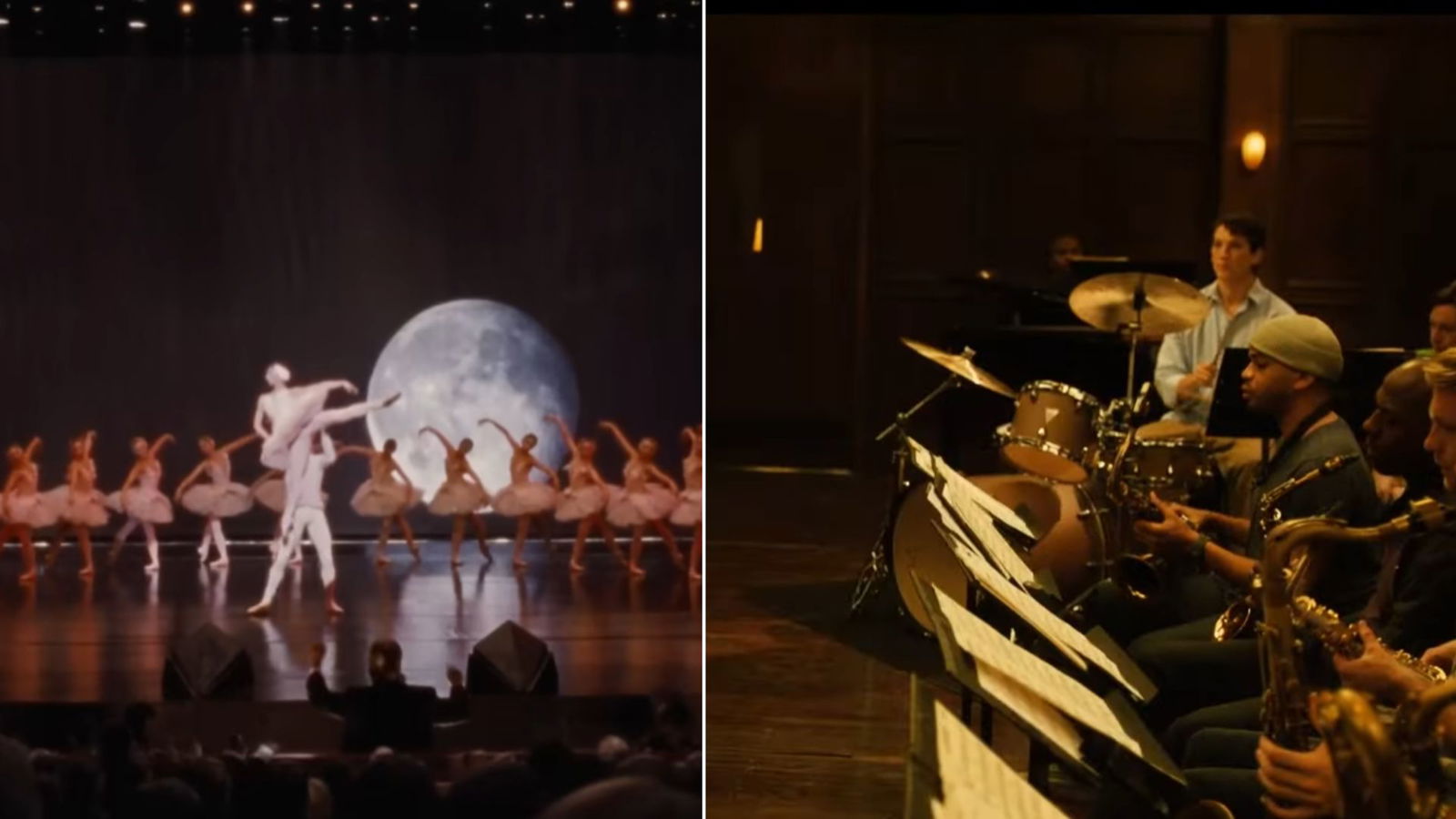
The pursuit of absolute mastery often requires a sacrifice so profound that it blurs the line between human passion and clinical insanity. By examining Black Swan and Whiplash cinematic masterpieces, one can uncover whether the path to artistic immortality is a dream or a nightmare.
This comparison examines how two cinematic masterpieces portray the devastating price of reaching the pinnacle of artistic achievement.
Artistic obsession serves as a violent catalyst that transforms the human spirit into something unrecognizable.
ADVERTISEMENT
Article continues below this ad
The goal-Perfection vs. greatness in Black Swan and Whiplash
In Black Swan, Nina Sayers pursues an internal and absolute state of perfection. She seeks to become the art itself, a goal that is fundamentally unattainable for any human being. This impossible standard inevitably leads to a complete psychological fracture as she attempts to transcend her own physical limitations.
Whiplash presents a different objective as Andrew Neiman strives for greatness and a lasting historical legacy. He wants to be remembered alongside the legendary figures of jazz history through external validation. While his goal is technically achievable, the pursuit requires him to discard his moral compass and every meaningful personal relationship.
The relationship between a creator and their guide often dictates the specific flavour of their suffering.
The nature of the mentor in Black Swan and Whiplash
Thomas Leroy acts as a psychological seducer who manipulates the psyche and s-------- of his lead dancer. He demands that Nina lose her sense of self to find the raw essence of the Black Swan. His pressure is predatory and subtle, designed to trigger a metamorphic change within her mind.
Terence Fletcher operates as an overt a------ in Whiplash who utilizes fear and physical intimidation to mold his students. He functions like a military drill sergeant who believes that trauma is the only valid tool for uncovering talent. His methods are built on public humiliation and the relentless rejection of anything that is merely good.
When the mind breaks under the weight of ambition, the physical form soon follows its lead.
The physical toll (Body horror vs. physical exhaustion) in Black Swan and Whiplash
The obsession in Black Swan manifests through visceral body horror that reflects Nina’s deteriorating mental state. Audiences witness skin peeling away and feathers erupting from her back as the art literally consumes her physical form. It suggests that reaching the pinnacle of ballet requires a literal shedding of humanity.
Whiplash focuses on the raw physical torture of repetitive, high-intensity performance. The film highlights the blood-soaked drum kit and the grueling muscular endurance required to maintain impossible rhythms. It treats musical practice as a combat sport where the only measure of success is the amount of physical pain endured.
The visual language of each film provides a unique window into the distorted reality of the artist.
Style- Surrealism vs. realism in Black Swan and Whiplash
In Black Swan, director Darren Aronofsky utilizes a surreal and dream-like style to mirror the madness of his protagonist. As Nina loses her grip on reality, the audience is forced into a state of confusion regarding what is a hallucination and what is real. This stylistic choice emphasizes the internal collapse of an artist lost in their own metaphor.
In Whiplash, Damien Chazelle employs a sharp and rhythmic realism that feels as precise as a drum beat. The editing is grounded and claustrophobic, ensuring that the tension feels inevitable rather than fantastical. This approach makes the toxic environment of the conservatory feel like a tangible, inescapable prison for the characters.
Every journey toward excellence eventually reaches a final crossroads where the artist must pay the ultimate price.
The conclusion- Sacrifice vs. submission in Black Swan and Whiplash
The ending of Black Swan is a definitive tragedy where the protagonist achieves her perfect performance at the cost of her life. Total transcendence requires a total sacrifice of the physical self. Nina finds her moment of glory, but she must perish to maintain the purity of that fleeting perfection.
The conclusion of Whiplash is an ambiguous and bittersweet moment of professional triumph. Andrew delivers a legendary solo, yet he does so by finally submitting to the will of his abuser. He wins his place among the greats, but he has transformed into a monster who has alienated everyone who ever cared for him.
ADVERTISEMENT
Article continues below this ad
Both films suggest that reaching the absolute summit of artistic achievement requires the systematic destruction of the self. While Nina finds liberation through a tragic physical sacrifice, Andrew survives only by surrendering his humanity to a cycle of perpetual abuse. Ultimately, these stories serve as haunting reminders that the price of immortality is often the very life and soul of the artist.

ADVERTISEMENT
Article continues below this ad
What are your views on which one is better on the scale of obsession art: Black Swan or Whiplash? Let us know in the comments below.
ADVERTISEMENT

Edited By: Hriddhi Maitra
ADVERTISEMENT
ADVERTISEMENT
