
“Art Is Not Sunday School”- James Gray Is Not Preaching Political Cinema, but Has Picked a Side
Bilder des Jahres 2024, Entertainment 09 September Entertainment Themen der Woche KW36 Entertainment Bilder des Tages 50eme Festival International du film americain de Deauville 50th American film Festival Deauville James Gray Elliott Lester 309023 2024 09 08 Copyright: xIvankaxVoisinx xStarfacex STAR_309023_059
Bilder des Jahres 2024, Entertainment 09 September Entertainment Themen der Woche KW36 Entertainment Bilder des Tages 50eme Festival International du film americain de Deauville 50th American film Festival Deauville James Gray Elliott Lester 309023 2024 09 08 Copyright: xIvankaxVoisinx xStarfacex STAR_309023_059
James Gray believes cinema is inherently political, but he does not want his own opinion on the subject to sound preachy, adding a nuanced voice to Hollywood’s growing debate over whether cinema should be considered political at all. Susan Sarandon and Javier Bardem continue embracing political activism, while Jennifer Lawrence has questioned celebrity endorsements. Michelle Yeoh and Kevin James have stepped away from political questions altogether.
Hollywood is already divided over the question, and Gray has given the argument another fascinating angle by separating political cinema from political preaching.
James Gray reveals his thoughts on cinema and political
ADVERTISEMENT
Article continues below this ad
“All movies are political in one way or another,” James Gray told Variety at Paper Tiger's New York Film Festival premiere on Friday, but he was careful not to turn that belief into a grand cinematic manifesto. For the filmmaker, the most interesting movies are those that let politics exist beneath the surface, rather than announcing exactly what viewers should take away.
"Not Sunday school. Art is not Sunday school,” he said.
That is where Gray draws his line. He told Variety that he does not want to preach, arguing that once cinema starts spelling out its position, it risks becoming a "polemic" instead of a movie. Gray would rather leave ideas humming underneath the story, allowing the audience to discover the politics without having them delivered as a ready-made conclusion.
IPA87348694 - Locarno, Switzerland Locarno Film Festival 2026 James Gray Lifetime Achievement Award In the photo: James Gray, director, writer, and producer; Raffaella Leone, producer; Rodrigo Teixeira, producer Copyright: xNickxZonnax xNickxZonnax 87348694
IPA87348694 - Locarno, Switzerland Locarno Film Festival 2026 James Gray Lifetime Achievement Award In the photo: James Gray, director, writer, and producer; Raffaella Leone, producer; Rodrigo Teixeira, producer Copyright: xNickxZonnax xNickxZonnax 87348694
His argument also explains why Gray remains fascinated by older Hollywood. Films from the 1940s can still move modern audiences precisely because they were not built around explaining a lesson to them, he told Variety. For Gray, the power of cinema lies in that lingering feeling: the movie says something, but it does not have to tell you what to think.
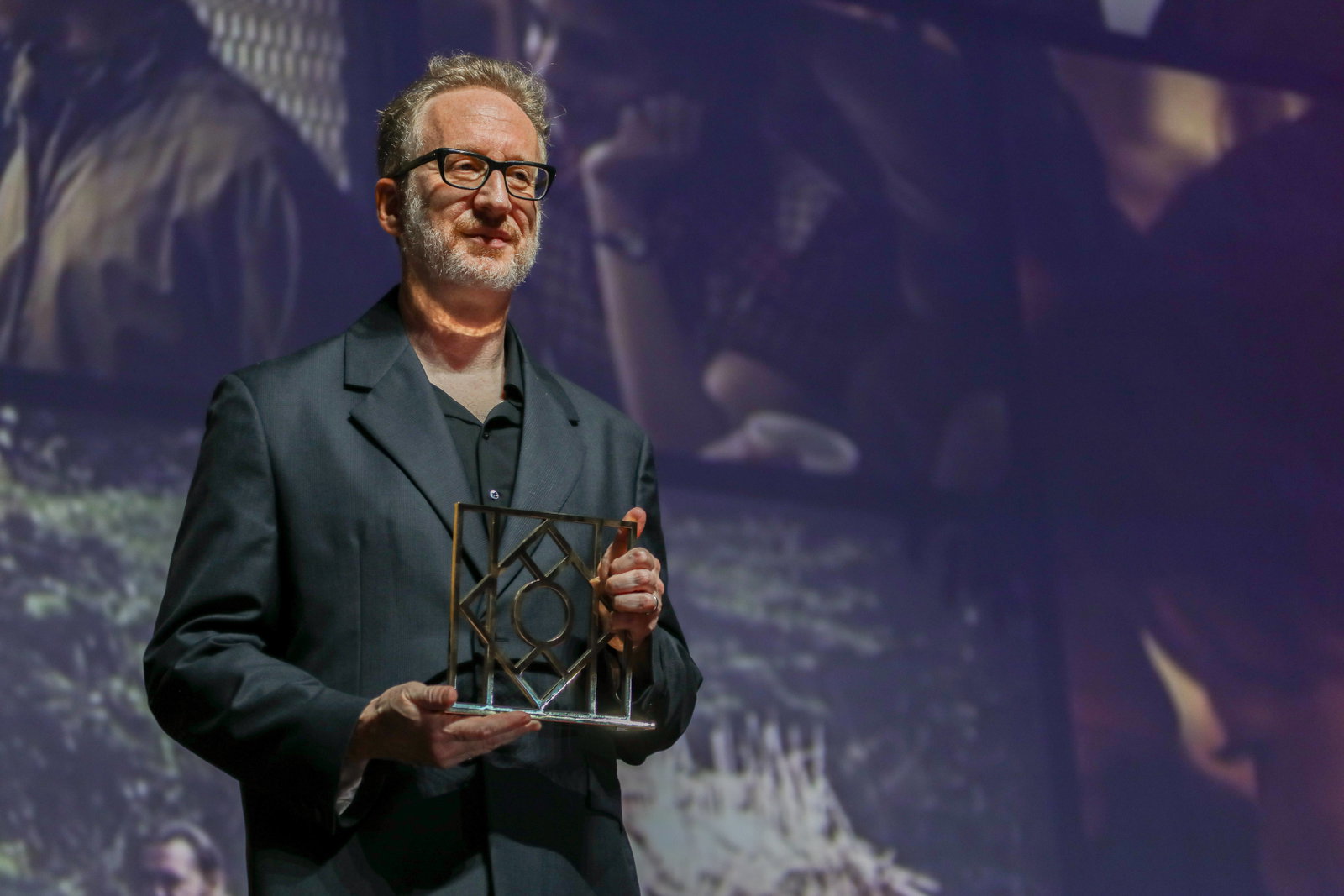
As James Gray, who admits he is not a good actors director, picks a side in the debate, his festival gem Paper Tiger makes for an intriguing test case.
How Paper Tiger matches James Gray's views
James Gray’s belief that cinema is inherently political becomes especially revealing when placed beside Paper Tiger, his new film set in 1980s Queens. The story follows brothers Irwin and Gary Pearl as an opportunity promising financial security pulls them into a dangerous world of corruption and Russian criminal enterprise. Yet the film never needs to announce its politics to make those tensions felt.
ADVERTISEMENT
Article continues below this ad
May 16, 2026, Cannes, France: Alexandra Dickson Gray and James Gray attend the red carpet of Paper Tiger at the 79th Cannes Film Festival. Cannes France - ZUMAs197 20260516_aaa_s197_262 Copyright: xMarcoxBaradax
May 16, 2026, Cannes, France: Alexandra Dickson Gray and James Gray attend the red carpet of Paper Tiger at the 79th Cannes Film Festival. Cannes France - ZUMAs197 20260516_aaa_s197_262 Copyright: xMarcoxBaradax
The American Dream, economic mobility, institutional weakness, and the precariousness of family protection all seep into the story without becoming lectures. Paper Tiger presents a world where the structures promising stability can prove remarkably fragile, while those chasing a better life discover how quickly ambition can become entrapment. It is Gray’s idea of political cinema working through subtext rather than declaration.

ADVERTISEMENT
Article continues below this ad
What do you think about James Gray's take on the cinema and political debate? Let us know in the comments!
ADVERTISEMENT

Edited By: Adiba Nizami
More from Netflix Junkie on Hollywood News





ADVERTISEMENT