
‘A Knight of the Seven Kingdoms’ Ending Explained: Did Egg Really Abandon the Targaryen Family? What Is the Post-credit Scene?
HBO Max’s A Knight of the Seven Kingdoms has everyone whispering about hedge knights, dragon blood, and the tiniest Targaryen schemer in history. Dunk limps across fields, Egg fidgets with destiny, and the kingdom quietly waits for the chaos that comes after chivalry meets teenage defiance.
Game of Thrones fans might feel déjà vu, yet there is mischief in the mundane, lessons under every tree, and power struggles that never make the headlines. The finale teases more than just knighthood; it asks, did Egg really rebel or obey?
While swords clang and loyalty hangs by a thread, the truth about Egg’s choices might just rewrite how you view royalty and rebellion.
ADVERTISEMENT
Article continues below this ad
Dunk and Egg show honor is more than bloodlines in A Knight of the Seven Kingdoms
After surviving the Trial of Seven, Dunk limps through Ashford Meadow, battered and morally exhausted, while Prince Baelor lies dead, a tragic casualty of courage and mismanaged royal bloodlines. Dunk declines the generous offers of Ser Lyonel Baratheon to train at Storm’s End and Prince Maekar to oversee Egg’s tutelage at Summerhall, believing his presence only spreads pain.
Yet, after reflecting on Ser Arlan’s lessons and counsel from Prince Daeron, Dunk proposes to take Egg as his squire on a journey beyond royal supervision. Here, Egg’s actions are crucial: the boy chooses to leave without Maekar’s blessing, implying a calculated rebellion rather than abandonment.
While some might call Egg disloyal, the series frames it differently: his agency is front and center. By sneaking away and lying about parental consent, Egg is not shirking family obligations; he is exercising the kind of youthful, principled defiance that even Ser Arlan would have nodded at approvingly.
In doing so, Egg asserts that moral courage and the life of a hedge knight can outweigh royal expectations. HBO makes it clear that abandoning bloodlines is not the same as choosing growth and the lessons only a perilous journey can teach.
Dunk and Egg’s bond, strengthened through trials and shared survival, survives this small-scale mutiny. The narrative emphasizes that loyalty is not blind obedience but a combination of courage, morality, and mutual trust.
Egg’s departure, though technically unapproved, is framed as a continuation of this ethos: the boy’s choices are not betrayal; they are an act of autonomy, ensuring the young Targaryen grows under real-world tutelage instead of golden-embroidered cages. The question, therefore, is not whether Egg abandoned his family but whether Westeros’ rigid expectations are themselves worth following.
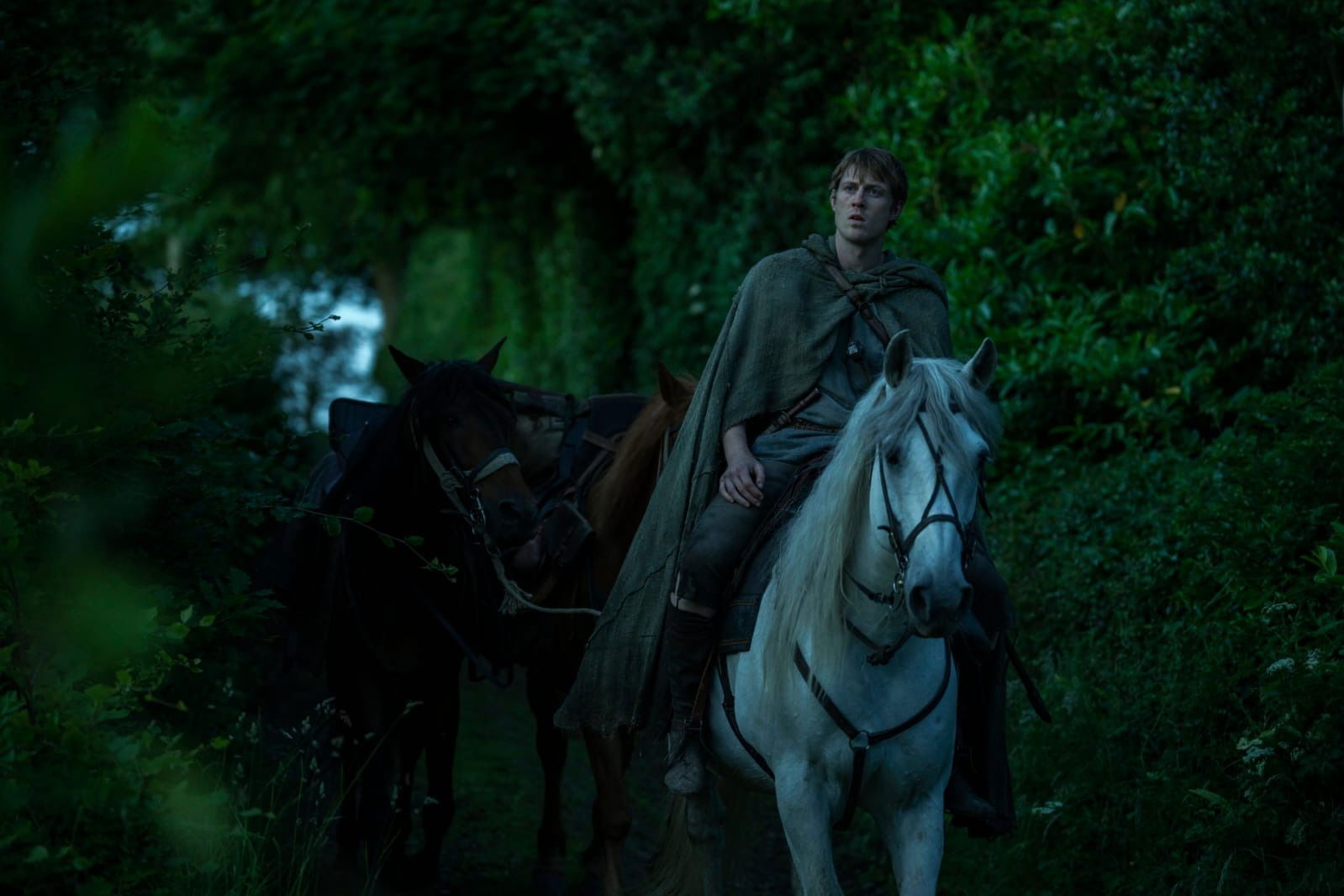
While Egg’s footsteps echo rebellion, they also whisper lessons about growing up beyond palace walls, hinting that moral courage is forged in motion, not in permission slips from kings.
Emotional choices shape the ending of A Knight of the Seven Kingdoms
The episode’s quieter moments carry seismic emotional weight. Egg cries beside Maekar, struggling with Aerion’s injuries and his own conflicted conscience. Dunk observes, silent and broken, yet resolute. The interaction underscores the series’ thematic heart: ordinary people, even princes, navigate grief, duty, and choice.
While the realm debates blame, Egg negotiates morality with his heart, his father, and the absent yet present guidance of Ser Arlan. One image of Dunk leaning against a tree, battered and thoughtful, communicates centuries of philosophical questioning in mere moments.
Dunk’s farewell gestures encapsulate the finale’s quiet brilliance. Sweetfoot, the white horse of Ser Arlan’s legacy, is gifted to Raymun with the subtlety of a sermon disguised as kindness. A penny nailed to a tree recalls men who left for war and never returned, signaling that heroism often goes unnoticed. Egg’s presence, arriving with a fabricated blessing, transforms these symbols into active choices.
As the sun sets over fields of golden wheat, Ser Arlan’s memory whispers through the leaves: “A true knight always finishes a story.” Dunk and Egg do not merely survive; they thrive in the philosophical terrain of ethical adventure.
With morality, loyalty, and autonomy tangled together, the finale transitions seamlessly into the anticipation of season 2 and the questions the post-credit tease promises to answer.
A final choice reshapes paths in A Knight of the Seven Kingdoms
HBO confirmed A Knight of the Seven Kingdoms for season 2 in November 2025. Showrunner Ira Parker assures cameras are rolling, promising more Dunk-and-Egg adventures in 2027. The series will likely adapt all three novellas and potentially introduce outlined tales beyond, charting Egg’s eventual rise as King Aegon V Targaryen.
While the first season concluded with philosophical closure, season 2 will extend the story into morally and politically complex landscapes, maintaining the delicate balance between laughter, tragedy, and the absurdity of royal dynasties.
The finale’s title card reads A Knight of the Nine Kingdoms, leaving fans debating: is it a renaming, a humorous Easter egg, or a subtle reference to Egg correcting Dunk about Westeros? Either way, the playful ambiguity keeps viewers theorizing.
The post-credit scene hints at the continuation of this narrative joke, ensuring that season 2 will not only explore political and ethical dilemmas but will also maintain the series’ trademark wit. Egg’s playful correction reflects his growth, intellect, and willingness to challenge authority with charm.
The post-credits confirm Egg’s rebellion against paternal permission, a subtle but explosive act of agency. Maekar realizes his youngest son has left without consent, leaving a void that sets the stage for future conflicts and philosophical lessons.
ADVERTISEMENT
Article continues below this ad
The scene frames season 2 as a meditation on freedom and the power of choice. Dunk and Egg ride away, a hedge knight and a prince, embodying the tension between tradition and self-determination. The narrative promises that the next installment will explore both the mundane and monumental, the ethical and political, in true Westerosi fashion.
ADVERTISEMENT
Article continues below this ad
What are your thoughts on Egg’s bold decision to defy Maekar and choose his own path? How do you think season 2 will explore the consequences of this philosophical rebellion? Let us know in the comments.
ADVERTISEMENT

Edited By: Aliza Siddiqui
More from Netflix Junkie on Hollywood News




ADVERTISEMENT