
2026 Met Gala Dress Code Revealed: What Does ‘Fashion Is Art’ Really Mean?
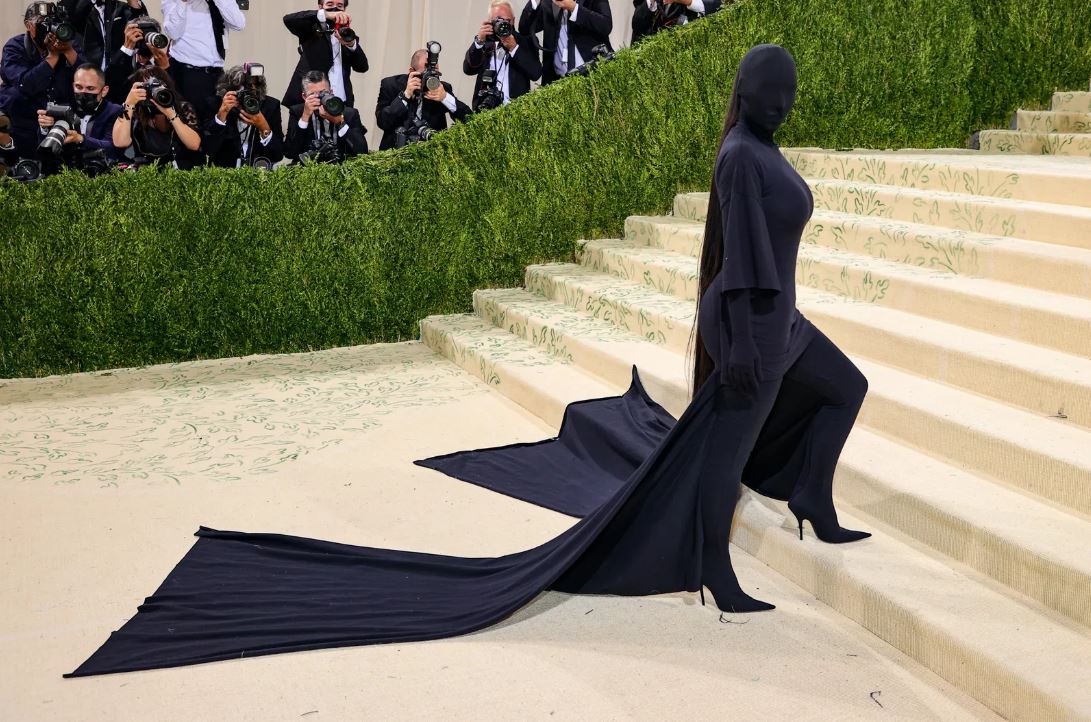
Seventy days until fashion’s most theatrical pilgrimage ascends the steps of the Metropolitan Museum of Art. The first Monday of May looms again, that annual collision of celebrity, scholarship, and spectacle. But after decades of papal tiaras, gilded camp, and American mythmaking, how different can 2026 truly be?
Here is the twist: the theme sounds almost disarmingly simple. And yet that simplicity may prove the most demanding brief of all. For now, we have only imagination as our atelier, sketching silhouettes in air, wondering how the world’s most photographed bodies will transform into living canvases.
The theme of the 2026 Met Gala
ADVERTISEMENT
Article continues below this ad
The theme for the 2026 Met Gala has been unveiled: Fashion Is Art. It mirrors the Costume Institute’s forthcoming exhibition Costume Art, an ambitious survey of nearly 400 objects examining the centrality of the dressed body across 5,000 years of visual culture. Installed in the museum’s new Condé M. Nast Galleries beside the Great Hall, the show will juxtapose garments with paintings and sculpture, collapsing the distance between canvas and couture. The message is rigorous: the body is not merely adorned, it is authored.
Fashion as art is hardly uncharted territory, which makes the challenge sharper. In 2018, Heavenly Bodies Fashion and the Catholic Imagination yielded papal capes, gilded halos, and one unforgettable Rihanna moment dressed as a jeweled pontiff. The theme was embodied quite literally. In 2026, embodiment becomes more abstract. Will someone channel Rococo excess in the spirit of Vivienne Westwood’s theatrical corsetry?
Could a Renaissance reverie recall the romantic severity of Alexander McQueen fall 2013? Perhaps Surrealism will surface through Schiaparelli’s anatomical gold, or Cubism through sculptural interventions worthy of Thom Browne. One imagines a Blue Period gown, severe and satin, or a Baroque fantasia echoing Christian Lacroix’s operatic couture. The field is vast. The references infinite. The risk monumental.
Who is granted the staircase becomes as critical as what they wear on it. If the exhibition interrogates the dressed body across 5,000 years, then the 2026 guest list becomes its contemporary appendix.
The guest list and the guardians of the Gala
If the clothes are the thesis, the guest list is the chorus. Though she has stepped down as editor-in-chief of Vogue, Anna Wintour remains the presiding architect of the evening, guiding its philanthropic and cultural agenda with characteristic precision.
The Gala Host Committee, as announced previously, is co-chaired by Anthony Vaccarello and Zoë Kravitz, and reads like a living index of contemporary culture. Among its members are Sabrina Carpenter, Doja Cat, Gwendoline Christie, Alex Consani, Misty Copeland, Elizabeth Debicki, Lena Dunham, Paloma Elsesser, LISA, Chloe Malle, Sam Smith, Teyana Taylor, Lauren Wasser, Anna Weyant, A'ja Wilson, and Yseult.
ADVERTISEMENT
Article continues below this ad
Now joining the committee are Adut Akech, Angela Bassett, Sinéad Burke, Rebecca Hall, Aimee Mullins, Tschabalala Self, Amy Sherald, and Chase Sui Wonders. As lead sponsors of the gala and exhibition, Jeff Bezos and Lauren Sánchez Bezos will serve as honorary chairs, a reminder that patronage, too, is part of the art historical tradition. The ticket price reportedly exceeds 75,000 dollars per seat.
In this constellation of performers, painters, athletes, writers, and models, the 2026 Met Gala feels less like a party and more like a curated exhibition of living disciplines. Fashion Is Art will not merely be worn. It will be interpreted.
ADVERTISEMENT
Article continues below this ad
As anticipation builds, the question lingers. When fashion declares itself art, who dares to prove it? Share your predictions.
ADVERTISEMENT

Edited By: Itti Mahajan
ADVERTISEMENT
ADVERTISEMENT
