
Interview: Gabriel Mascaro Explores Aging, Freedom, and Rebellion in 'The Blue Trail'
"The future is for everyone" - is the message that populates the screen at every possible opportunity it gets in Gabriel Mascaro's global sensation O Último Azul or The Blue Trail. While the body of the film struggles to paint the desired picture, the soul makes you realise what the true meaning of the dystopian motto of the Brazilian government is. Winning many accolades around the world, including a win at the Berlin Film Festival, the "coming of late age story," as the director puts it, is finally releasing in the US on April 3, 2026.
In a conversation with Netflix Junkie, Gabriel Mascaro talked at length about his grandmother's discovery of life at a late age, the music of the film, and the local Amazon population's efforts that made the film what it is.
Manorath: Your film balances a technologically advanced future while also staying surprisingly primitive when it comes to other things. How did you find the right balance for the story?
ADVERTISEMENT
Article continues below this ad
Gabriel Mascaro: For me, when I first started developing the idea, I wanted to move away from a typical futuristic sci-fi approach. Instead of focusing on advanced technology and how it disrupts our lives, I was more interested in exploring how culture shapes society—and how we can view that through a different lens. So the film isn’t a dystopian story driven by high-tech gadgets. It’s about a world where certain unsettling ideas are normalized—like elderly people being confined and taken away in a “wrinkle wagon,” or alligators being processed in massive assembly lines for meat, much like cows or bulls. It plays with familiar symbols and icons, but recontextualizes them to create a sense of displacement from reality.
The story isn’t set in the future, the past, or even the present. It exists in a kind of suspended reality—a blend of dystopia, fantasy, and fable. The film intentionally mixes genres to create something fluid and unexpected. What interested me most was the idea of elderly people as protagonists in this kind of world. We rarely associate them with rebellion or coming-of-age stories, because society tends to reserve those narratives for the young. I wanted to challenge that—to show that older individuals can still discover, evolve, and experience meaningful rites of passage that aren’t just about death.
In that sense, the film is very playful. It moves between genres, and the soundtrack plays a crucial role in guiding those transitions. Ultimately, it’s a reflection on subversion—questioning why different kinds of protagonists can’t exist within these narrative spaces.
Manorath: The idea of “honouring” the elderly before stripping them of autonomy feels disturbingly humane on the surface; were you interested in exploring how oppression often disguises itself as compassion?
Gabriel Mascaro: For me, it was very important to make a film about someone who is still deeply passionate about life. While the world of the film may feel almost dystopian, at its core, it’s actually quite utopian. I wanted to allow this character to go on a journey of rediscovery—to meet new people, form meaningful friendships, and take risks. In many ways, the film is inspired by a personal experience. When my grandfather passed away, my grandmother started painting at the age of eighty. That stayed with me—it was incredibly moving to see someone, so late in life, find a new sense of purpose.
That feeling shaped the film. When we think about elderly protagonists in cinema, there are very few examples, and when they do appear, their stories are often tied to death, terminal illness, or nostalgia. Their narratives tend to focus on the past—on memories, on a “golden age” that has already slipped away. Elderly individuals are often portrayed as preservers of history, almost like living museums.I wanted to challenge that perspective. Instead of seeing an aging body as something fixed or reflective of the past, I wanted to portray it as something evolving—something very much alive in the present. A body that can still take risks, embrace change, seek out new experiences, and be transformed by them.
That idea was at the heart of everything for me.
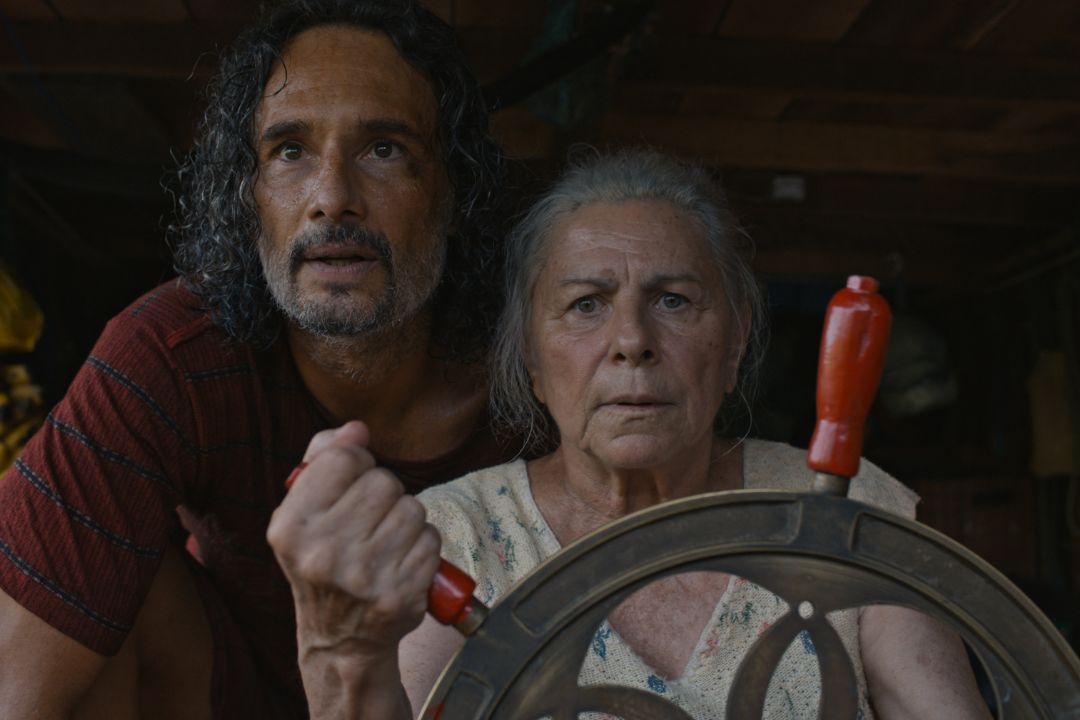
Manorath: Tereza isn’t portrayed as fragile or nostalgic, but as someone still full of desire and agency. Was this a deliberate response to how cinema traditionally frames older women?
Gabriel Mascaro: Yes, it really came from observing my grandmother rediscover life after my grandfather passed away. That experience made me realize how little representation there is in cinema for that specific feeling. I think part of the reason is that many genres don’t naturally accommodate elderly protagonists—they tend to be reserved for younger characters. I found that interesting, especially when I thought about films I deeply admire, like Amour or Tokyo Story. Both portray older characters beautifully, but they often exist in contrast to the world around them. In Tokyo Story, for example, there’s a sense that the elderly characters are out of sync with the fast pace of modern life. There’s a kind of distance, even a quiet nostalgia. Similarly, Amour deals with the emotional weight of aging and the end of life. These are powerful films, and I love them, but I wanted to explore something different—something closer to the feeling I witnessed in my grandmother.
To do that, I had to look beyond traditional narratives associated with older characters. I turned to genres that rarely include them—like romantic films about fleeting connections, dystopian stories, and road movies. I revisited films about youth, rebellion, and discovery—stories about young people traveling, taking risks, experimenting, and forming bonds. By drawing from those influences, I was able to place my character in a space of transgression and transformation. The film blends elements of road movies, dystopia, and a kind of “coming-of-age” story—except it’s about coming of age later in life. There’s also a touch of fantasy, almost like a psychotropic experience, which further pushes the boundaries of how we typically imagine elderly protagonists.
In the end, it’s about opening up these genres to new kinds of characters and possibilities.
Manorath: For me, one of the best things about this film was the music. Both the score and the songs used take the experience up to multiple notches. How did you find the perfect sound for it?
Gabriel Mascaro: That’s a very interesting question, because during the editing process, I remember feeling a certain absence—I was missing the humor that was present in the screenplay. The edit started to feel too serious, and the film just wasn’t working. That’s when I began to understand how crucial the tone would be, and how deeply it would depend on the music. The music became essential in restoring the mood I had originally imagined while writing.
So the approach was to create a kind of playful, circular palette—something almost picaresque in nature. The music is intentionally counterintuitive. It never tries to hide or simply follow the emotional state of the characters. In fact, it does the opposite. If a character is feeling sad or stuck, the music might be lively and playful. It creates a contrast that brings energy and unpredictability to the film. This dynamic really helped bring back the balance and spirit the story needed.
I was very happy with how it turned out, and it was also a beautiful collaboration. The composer was working on his first film, which made the experience even more special.
Manorath: One of the most amazing things about this movie is the cinematography. The scenic portrayals of the great Amazon River and its many tributaries. You shot a lot of this film on boats, either travelling or on establishments that are almost boats sitting on the river. How difficult or easy was it to shoot this film, considering that a lot of it is dependent on the natural surroundings in such cases.
Gabriel Mascaro: I wouldn’t say it was as difficult as Fitzcarraldo, but it was definitely very challenging. That said, we had an incredible crew—especially the local team from the Amazonas region. It made a huge difference to be guided by people who are experienced in shooting in that kind of environment. They really knew what they were doing, which made the process much more manageable.
We also worked with more than 20 actors from the Amazon region, many of them in supporting roles. Their familiarity with the setting and their experience added so much to the production. Even though the shoot was demanding, having such a skilled and grounded team helped make it far less stressful. At the same time, there’s something about working in that environment that you simply can’t control. You can plan as much as you want, but once you’re on the river, surrounded by the vastness of nature, you have to adapt. The forest is overwhelming in scale and presence, and it inevitably shapes how you approach the film.
In a way, the environment becomes part of the narrative itself. The rivers, the movement, the textures of the landscape—they all seep into the film. There’s something slow and meditative about it, yet at the same time, it feels infinite in its possibilities. It was a truly special experience.
Manorath: By the end, the film feels less like a resolution and more like an open question. What do you hope audiences sit with after the credits roll?
ADVERTISEMENT
Article continues below this ad
Gabriel Mascaro: It’s interesting because the film is about a woman who wants to fly. But for me, what matters in the end is that she realizes she can go even further than she ever imagined. Some people might feel frustrated that they don’t actually see her fly. But for me, that wasn’t the point. What felt more important was that she came to understand she has the right to choose her own destiny.
That realization, to me, is far more powerful than whether she flies or not.

ADVERTISEMENT
Article continues below this ad
Are you excited for this beautiful coming-of-age story? If yes, let us know your thoughts about The Blue Trail?
ADVERTISEMENT

Edited By: Adiba Nizami
More from Netflix Junkie on Hollywood News


ADVERTISEMENT