
EXCLUSIVE | 'Rise and Shine' Star Analesa Fisher Speaks Out on Authentic Autism Representation in Hollywood
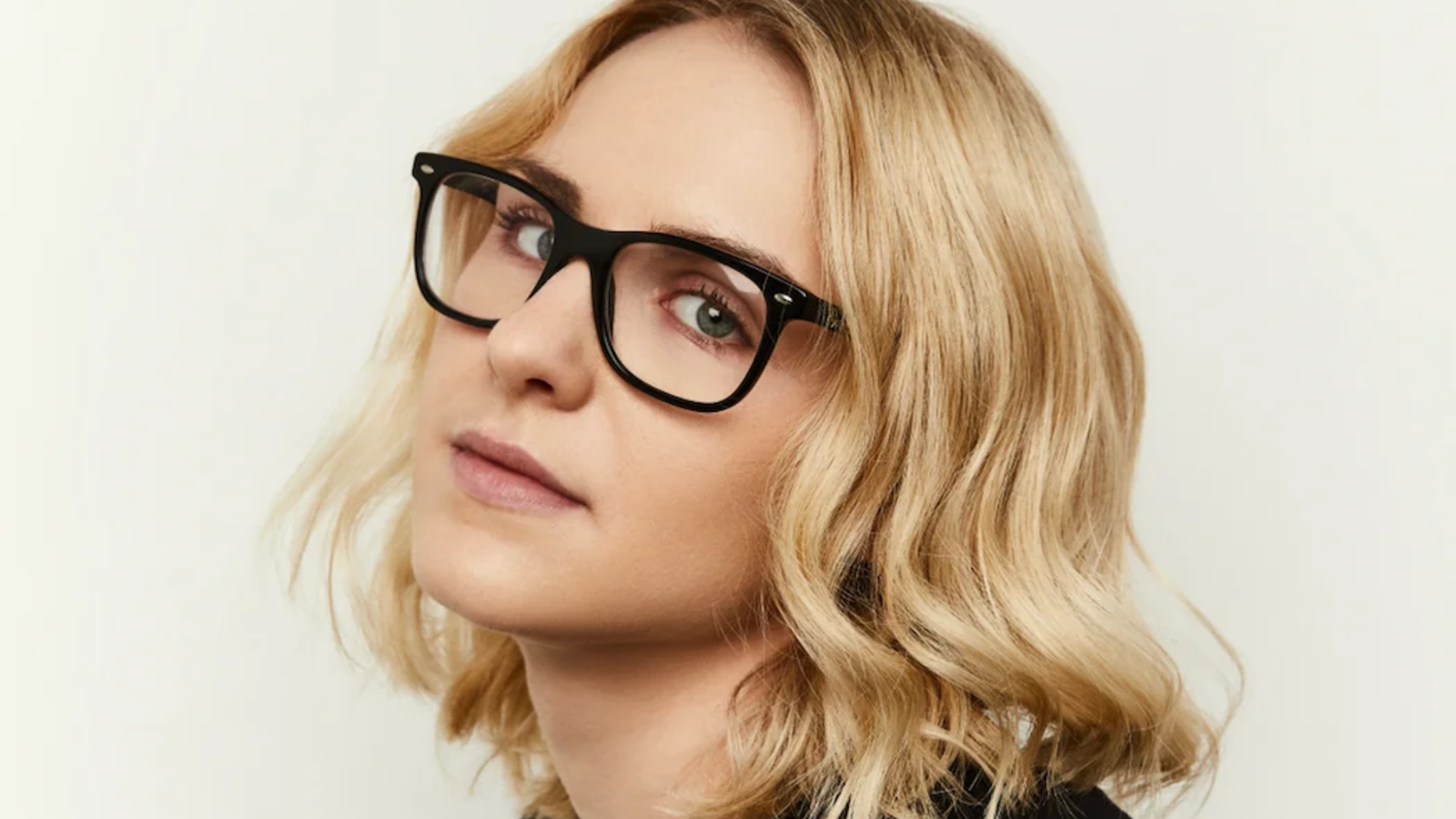
Laura Sommers' 'Rise and Shine' is one of the rare movies that explores not only friendship but also self-discovery and the importance of stepping outside your comfort zone in the most authentic way possible.
The film chronicles the journey of two girls, Terri (Ana Sharp) and Amanda (Analesa Fisher), whose friendship challenges both their viewpoints and leads them to do things they might otherwise have shied away from. Terri is keen to go through all the rites of passage of high school (prom being one of them), and Amanda is slowly starting to open up to doing things outside her normal routine. The movie is particularly powerful in its treatment of disability and neurodivergence in that it doesn't reduce the girls to their diagnoses.
It's a film about the joy of friendship and the freedom to live your life on your own terms. If Terri is the soul of the story, Amanda is its grounding force, and Fisher plays the role with subtle warmth, humour, and an understanding of Amanda's complexities. This is the first time they are playing an authentically autistic character and brings an added layer of personal understanding to the film's portrayal of neurodivergence. Netflix Junkie caught up Fisher, who opened up about bringing the character to life, working alongside Ana Sharp, and ensuring that the friendship at the centre of the story felt authentic. The actor also discussed the importance of authentic autistic representation, the responsibility of portraying characters inspired by real people, and why disability stories should not always have to revolve around extraordinary achievements to leave an impact.
Aayush Sharma: Amanda is not simply Terri's supportive best friend. She has her own reservations about trying new things, stepping outside her comfort zone, and embracing experiences such as prom. You have described yourself as relating to her stubbornness and tendency to stick to familiar things. How did you approach building Amanda as an individual rather than defining her entirely through her friendship with Terri?
Analesa Fisher: I think our director and writer did a wonderful job of making sure Amanda had her own arc in the screenplay. Honestly, when I read the entire script after booking the part, I immediately felt there was so much to explore and play with. She was much more than a one-dimensional character. One thing our director was particularly adamant about was making Amanda as much like me as possible. She wanted me to bring my own personality and experiences into the role in every way I could. We really got to play around with that. Even in the mall scene, for instance, when they go into the dress shop, it's clear that I'm not particularly into dresses. I'm there because I'm a good friend and this is something Terry enjoys, but I'm not necessarily someone who would get excited about trying on dresses. It's those little details that add different layers to the character.
I also think Terry's openness to trying new things and breaking the status quo gradually rubs off on Amanda. It makes her question whether she really wants to spend her entire life staying within the same boundaries, or whether there's something to be said for stepping outside that comfort zone and trying something new in her own way. I think that's a really lovely message because their friendship isn't like the typical Hollywood movie friendship, where one character is simply the sidekick who exists to cheer the other person on. Both of them have their own individual stories and journeys. It's their presence in each other's lives that ultimately helps them grow.
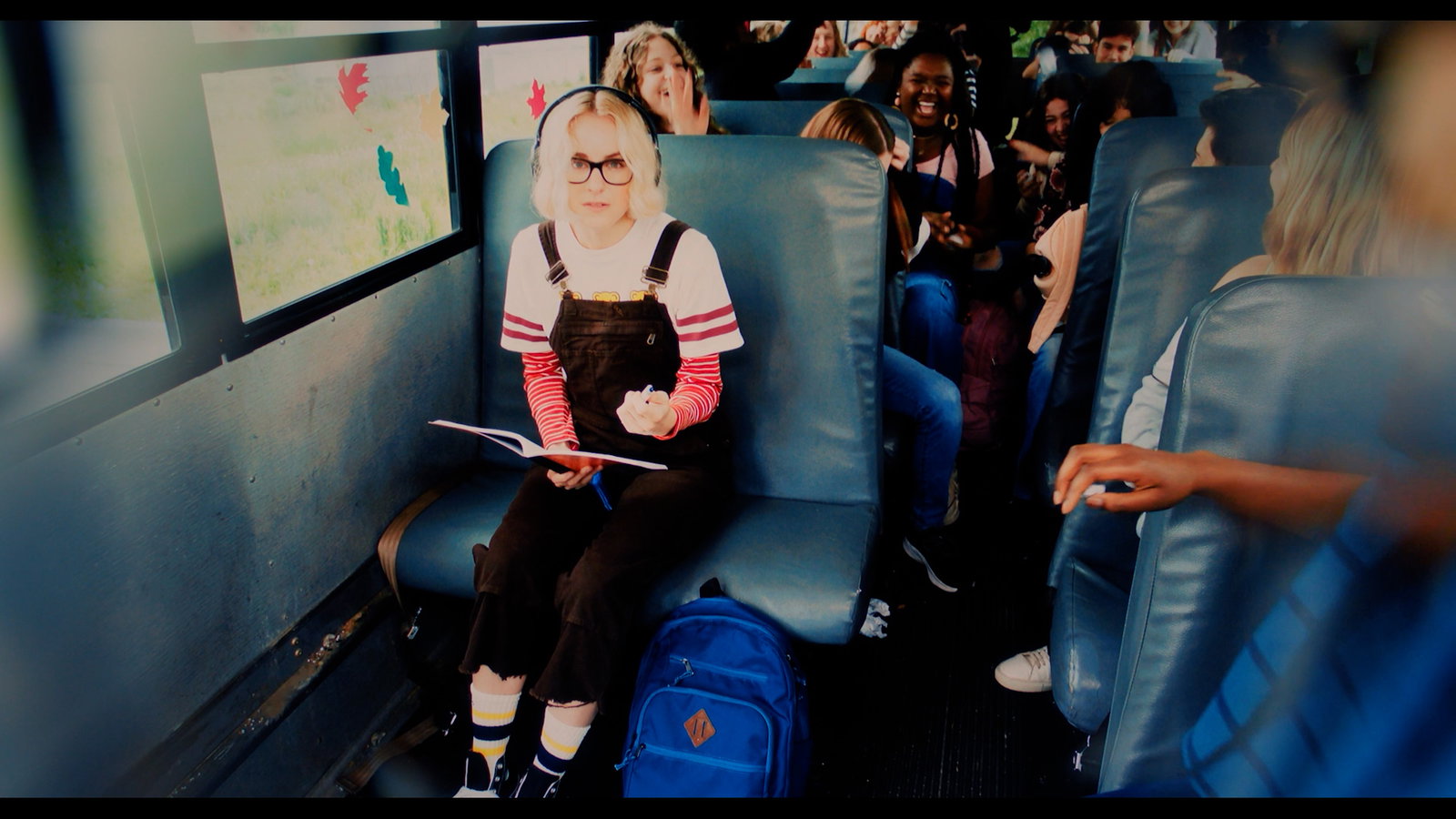
Aayush: One of the most interesting aspects of Amanda and Terri's relationship is that their friendship is a two-way street. Terri encourages Amanda to become more open to new experiences, while Amanda offers Terri companionship as she navigates an unfamiliar environment. How important was it for you and Ana Sharp to establish that sense of mutual growth? Did your chemistry develop in unexpected ways during filming?
Analesa: Honestly, we did a chemistry read together. Anna had been cast about a year before the movie started filming. She was the first to be cast, followed by Janice, then me, and finally Doc. So, Anna did chemistry reads with everyone being considered for Amanda's role. I found out later that, when it came down to one other person and me, they asked Anna who she wanted to work with, and she chose me because she felt we got along the best. It's always been that way between us. We're actually quite similar to our characters in the sense that Anna is nothing but light and joy. She loves life, spending time with friends, going out with her boyfriend, and doing all those fun, cutesy, girly things. She knows I'm pretty much the opposite. I'm more of a tomboy, very set in my ways, stubborn, and extremely blunt with her. If I think she's dating the wrong guy, I'll tell her to kick him to the curb and hit him with her car. I'm just over it!
I think that's what makes our dynamic work so well. More than anything, from what Anna and I have talked about, I think what we both loved was that we weren't trying too hard to play these characters. We were simply being ourselves. We got along so naturally and brought out the best in each other as people, and that translated so easily onto the screen. You can especially see that in some of the mall scenes, where they pretty much let us loose and said, 'Good luck, have fun!' We had a general idea of what we wanted to do, but we left a lot of it up to ourselves. We were given the freedom to take control of those scenes and decide how they would play out.
Aayush: This is your first opportunity to portray an authentically autistic character, and you have spoken about initially worrying whether you were autistic enough to represent the character and the wider community. How did you navigate that responsibility without allowing the pressure of representation to interfere with your creative instincts? Did playing Amanda change the way you understand or appreciate certain aspects of your own identity?
Analesa: Oh my gosh, there are so many layers to that. I remember when I first did my self-tape audition, I kept asking my roommate, "Do we need to redo it? We need to redo it." And she would say, "Why? It's good." But I kept feeling like I wasn't being myself. I was trying to be something I wasn't, and I knew we needed to go back and try again. I was particularly conscious of that because there's a short film, Once More Like Rain Man, that is quite well-known within our community. It explores how, when autistic or disabled actors audition for roles, there's sometimes this expectation from casting teams to see how far they can push those traits. They want to see what they assume autism or a particular disability looks like. In the film, autistic actors are asked to do things like, "Can you play it a little more autistic?" And it's like, what does that even mean? You don't live with it, but I do. I understand what it means to me, but I'm not sure you understand what you're asking for.
That whole idea made the audition process quite confusing for me. I kept reminding myself to fall back on who I was and stay true to myself. Usually, when I audition for a character, I'm focused on transforming into that person. This was the one time I had to stop trying to become someone else and just be myself. It was the same throughout the callback process. Even after I booked the role, I remember thinking, "Oh God, I don't know why they hired me when there were so many other autistic actors they could have chosen." I was still really nervous on set, and I didn't feel like I was doing a particularly good job. It wasn't until I had a conversation with my mom that something clicked. She told me, "For the first time in your entire career, all you have to do is be yourself. You don't have to do anything else." And I remember thinking, "Oh, yeah. That's true."
I think that's where the authenticity comes from. Autism, specifically, is called a spectrum for a reason. It's an incredibly broad spectrum, and I have some of my closest friends who are also autistic. We're similar in so many ways, but we're also very different in others. That's simply part of being human. Our individual upbringings and experiences also shape who we are. I think the more opportunities we have for roles like this, with directors and casting directors taking the lead and saying, "We're not trying to make you into anything. We just want you to be yourself and show people what authentic representation looks like," the better it will be. Not only will people in my community feel more seen and comfortable with who they are, but I think audiences in general will become more open and understanding. They'll get to see all this different representation and realize, "Wow, autism comes in so many shapes and sizes."
Aayush: Terri's optimism is a major force in the story, but there is an interesting question about how positivity is perceived when someone is navigating challenges that other people might not fully understand. How did you approach the film's balance between celebrating Terri's outlook on life and acknowledging the very real barriers that she and Amanda experience? Did you ever discuss avoiding the idea that disabled people must constantly be inspirational to those around them?
Analesa: That was a huge part of what we discussed while making this movie, and I think it's something we all tried really hard to balance. The real Terry, who the character is based on, is genuinely that optimistic. That's simply who she is. We weren't trying to make her inspirational to anyone through our portrayal of her. She is an optimistic person, but she also faces challenges, and there's nothing wrong with showing both sides of that. I think it's important to push back against this idea that every disability story has to revolve around overcoming some enormous obstacle. There's this expectation that, for a disability story to be told, someone has to do something extraordinary. You have to storm the Capitol and take on the president, or win a national spelling bee against every able-bodied and neurotypical person. We keep coming back to these huge, inspirational stories.
But when you really look at this movie, it's genuinely just about a girl who wants to go to prom and experience high school. That's it. She wants to have the same experiences as everyone else. So, when she encounters things like bullying, sensory issues, or people at school who don't quite understand her, those are simply part of her everyday experiences. It's no different from what you might see in any other TV show. You could take Terry out of the story and replace her with Carrie from Mike Flanagan's new show, and the basic idea would still be the same: she's a girl who wants to go to school and experience something she's never had the opportunity to experience before. She's not disabled or neurodivergent; she's just a girl. And that's really what we wanted people to see. That was our main focus: showing that this is simply a girl who wants the same things every other girl in America wants right now.
The second important thing was giving us the opportunity to speak up for ourselves and have a say in how certain things were portrayed. There were moments on set when I'd approach our director on the day of shooting after looking over the material at the hotel the night before. I'd say, "Hey, I was going through this scene, and I don't really like how this line of dialogue is written because I feel like it infantilizes people with autism," or I'd explain another concern I had about how something was being presented. And she'd simply ask, "Then what would you like to change it to?" We'd have a quick conversation, make the changes, and move forward. That was never the goal: to turn this into some grand inspirational story or make a statement about what disabled people can or cannot do. We just wanted to tell a nice, genuine story. I honestly don't know how else to describe it.
Aayush: The film is based on Remembering Terri, Janice Steele's memoir about Terri's life, and Amanda is also based on a real person who was Terri's best friend. Did knowing that you were portraying someone who actually existed influence your preparation? Did you have access to any personal accounts, photographs, or additional material that helped you understand the real Amanda beyond what was written in the screenplay?
Analesa: The real Janice and the real Doc were on set with us about 90 percent of the time. Janice, in particular, had worked with Michael Sagliano on the screenplay for almost two years, so she was very much involved in the entire process and had a strong influence on how the story came together. Interestingly, I didn't even know Amanda was based on a real person until after I booked the role. I've auditioned for historical characters before, where you know you can look them up, study how they dressed, and try to recreate their hairstyles and mannerisms. But in this case, I knew Terry was a real person. I just assumed everyone else in the story was fictional. I didn't realize that wasn't the case until later.
So, when I arrived on set, one of the first things I asked Janice was, "How much of Amanda do you actually want me to base on the real person?" And she told me, "The writing is there. Other than that, we just want you to be yourself." I think that speaks to what Janice wanted to achieve with the film. She wanted to tell Terry's story and preserve the essence of what it was really about: the joy of going to school for the first time, experiencing new things, and navigating the challenges she faced along the way. Beyond that, they wanted us to bring ourselves to the characters rather than feel like we had to recreate real people in every detail.
We kept checking in with Janice throughout the process, right up until the premiere. I remember Anna and I going up to her there and asking, "Did we do okay?" She took both our hands and said, "You did Terry and Amanda so much justice. Thank you." We were like, "Okay, as long as that's the case, we're happy!"
Aayush: You have described Cyberpunk: Edgerunners as one of your favourite anime, and you had watched the first season several times before joining the second. What was it like going from being someone who loved this world as a viewer to becoming part of the creative team responsible for expanding it? Did being a fan ever make you more conscious of the expectations surrounding the sequel?
Analesa: Honestly, I went through all seven stages of grief with it! When I found out there was going to be a second season, I auditioned for some of the lead characters but didn't get any of them. I was completely fine with that. I was still a fan of the show, and I was genuinely excited to see where the next season would go. Then they kept auditioning for more characters, and I didn't get any of those either. But I was being called in to audition for all these different roles, so I kept telling myself that I must be doing something right. Omi was actually the last character they were casting when I finally got the part. By that point, I'd already made peace with the idea that it probably wasn't going to happen for me. I had convinced myself there was no way I was getting on the show.
So, when I finally got it, I was absolutely thrilled. I was in tears, thinking, "There's no way this is actually happening!" But then I went through the stages of grief all over again on my way to the studio because suddenly, there was so much pressure. This show meant so much to me. I think there's a certain freedom that comes with not being too attached to something. It's not that you don't care, but you can tell yourself, "Whatever happens, happens. I'm just going to show up and do my best work." But now, all of a sudden, I wasn't just doing this for myself. I was also doing it for the younger version of me who had loved the first season so much. That added an entirely different level of pressure.
During my first few recording sessions, I kept thinking, "Oh my God, I'm doing everything horribly wrong!" I remember going home at one point, and eventually, my insecurities made their way back to our director. She had to take me aside during one of the recording days and reassure me. She said, "You're doing a great job." And I was like, "I really don't feel like I am." She reminded me, "We hired you for a reason." And I was like, "Okay!" So, it was definitely a process. But I think once we wrapped Episode 7, something finally clicked. Episode 7 was officially in the can and had been handed over to Netflix. There was no going back at that point! I think I finally relaxed, stopped putting so much pressure on myself, and was able to just enjoy the experience and have fun with it for the remaining episodes.
Aayush: More than a dozen speaking roles in Rise and Shine are portrayed by actors with disabilities, including performers whose lived experiences reflect the disabilities of their characters. You have previously emphasized that disabled performers are professionals who deserve opportunities based on their talent rather than being treated as an accommodation challenge. What did this production demonstrate about the difference between simply casting disabled actors and creating an environment where they can genuinely participate in the filmmaking process?
Analesa: I think what's so beautiful about this film is that everyone showed up with an open mind and a willingness to learn. I don't want to put words in anyone's mouth, but I think a lot of the cast and crew initially expected the process to be a much bigger challenge. They were probably wondering how we were going to manage everything, given that we had children in wheelchairs, children with Down syndrome, and autistic children who might need additional breaks or feel uncomfortable wearing certain clothes. There were all these different accommodations to consider, and I think people were initially unsure of how it would all work.
But I think within the first week of filming, everyone realized that it really wasn't any different from working on a regular set. That's something I already knew, but it was so wonderful to actually see it happen. We had a scene in our special education classroom, for example, that featured a large number of disabled actors. And, as I said, everyone was simply there to work. Nobody was causing a commotion or making a big deal about anything. We knew our lines, we were prepared, we were happy to be there, we were having fun, and we took direction just like everyone else. When we needed to go back and do another take, we did.
I think it really goes to show that if we get the audition, prepare for it, get the callback, show up for it, book the job, and eventually arrive on set, that should tell you something. We want to be there. We want to work, and we want to be professional about it. It's not as though we've just wandered in off the street and asked if we can be in a movie. This is something we're actively pursuing, and we're putting in the work to be part of it. All we're asking is that people take us as seriously as we take the process.
Aayush: The film's underlying message is that it is never too late to pursue experiences, relationships, or milestones that you might have once thought were out of reach. However, I think there is another interesting dimension to this: sometimes, people don't realize they are limiting themselves until someone else shows them a different possibility. Was that something you personally connected with in Amanda's journey? Has working on this film made you reconsider any assumptions or boundaries you have placed on yourself?
Analesa: Oh gosh, I think it's twofold. First, it's something I was learning myself while working on Amanda as a character. It's also something my friends have taught me a lot about, and something my parents did a really good job of instilling in me while I was growing up: just try. And if you don't like it, that's okay. My mom would always encourage me to try new foods. I'd say, "I know I'm not going to like it," and she'd respond, "Well, then it's okay if you don't like it, but at least give it a try." She was the same way about family vacations. I'd tell her I didn't want to change my routine, leave home, or go somewhere unfamiliar, but she'd say, "We're going to try it, and if you get there and you're having a horrible time, we'll figure it out then." My friends have taught me a lot about that, too. I've had some friends who were so conscious of accommodating me that they'd say, "Oh, we didn't invite you to this party because we didn't think you'd be able to handle it." Then I've had other friends who were like, "No, you're coming to the party. And if you only stay for five minutes, that's completely fine, but you need to show up." And I'd be like, "Oh, okay!" The funny thing is, I'm always happy when I give these things a chance.
So, getting to explore that through Amanda was really meaningful because it's such a big part of her character. She's very set in her ways. She knows her routine, how she does things, and how she interacts with people. Then Terry comes along and challenges all of that. She's like, "But what if we shook things up? What if we went to the mall? What if we went to prom? What if you tried all these things you never expected yourself to do?" And Amanda gives it a chance and actually ends up having a wonderful time. I really hope other autistic girls can see that and take something positive away from it. They can think, "Oh, that's great. Maybe I can try these things, too." And if they need to bring their headphones along, that's absolutely fine. If they have a horrible time, that's fine, too. Maybe they only stay for five minutes before heading to Waffle House with their best friend. That's okay!
Sometimes, just putting yourself out there and giving something a try can make a world of difference. And I think that's the message I'd really love people to take away.
Have you seen Rise and Shine? Let us know your thoughts.

Edited By: Aayush Sharma
